How to Get Rid of Maggots in a Trash Can (Fast)
Updated October 9, 2026 · Bin Bros KC Team
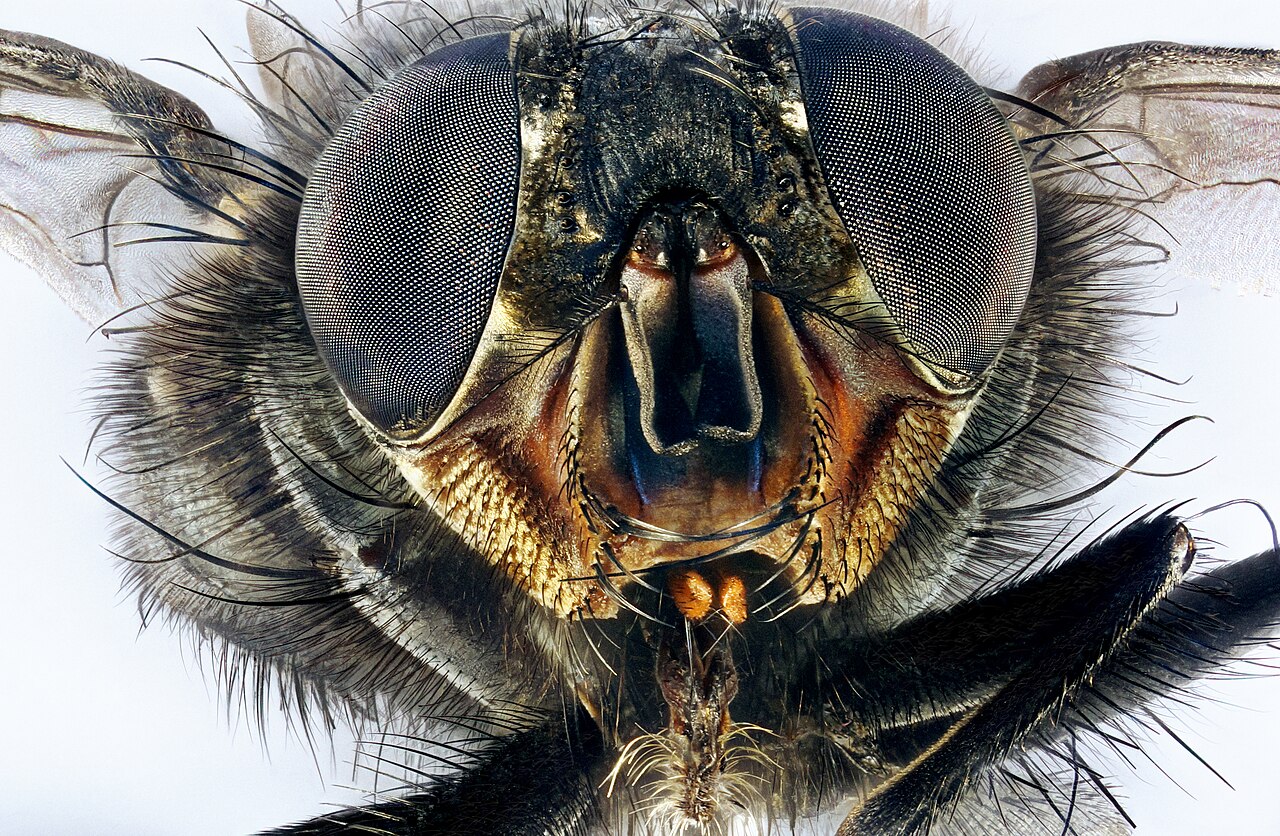
Housefly macro by Irina Petrova, Wikimedia Commons, CC BY 4.0

Short version: to kill maggots in your trash can today, pour boiling water over them, let the can dry in direct sunlight with the lid open, then clean the can with a bleach-free disinfectant and take out the trash daily until the cycle is broken. That's the emergency fix. The rest of this article is how to make sure you never have to do it again.
If you've never dealt with maggots before, the first reaction is usually panic. It shouldn't be. Maggots in a residential trash can are a common warm-weather event, especially in Missouri humidity, and they're handleable in about 20 minutes. Here's the full process.
When this happens: late May through early October is the window. Clay and Platte County run high humidity through the summer, and a stretch of 95°F-plus days is when Northland bins go from clean to crawling in about 48 hours. A warm week in spring or a mild October can do it too. If it just happened to you, you are not unusual — and the fix below still takes about 20 minutes.
Maggots in your bin right now? Let the Bros clean it.
Maggots right now and don't want to deal with it? We deep-clean infested bins at your curb — 200°F water, pet-safe, no harsh chemicals, and we haul the mess away. Code FIRST50 takes 50% off your first clean.
Book in 60 seconds — 50% off with FIRST50 →What maggots actually are
Maggots are fly larvae, mostly from common house flies (Musca domestica) or blow flies (Calliphoridae). Adult flies lay eggs on food waste — they can lay up to 150 eggs at a time, and the eggs hatch within 8 to 20 hours in warm weather. The maggots you're seeing are the larval stage, which lasts 5 to 11 days before they pupate into flies.
Two implications:
- If you see maggots, there are fly eggs you don't see. Removing the visible ones doesn't end the cycle on its own.
- They move fast. A bin that's clean on Sunday can have maggots by Tuesday if flies get inside.
Maggots are not dangerous to touch for brief contact, but they can carry bacteria from the waste they've been eating. Wear gloves. Don't breathe directly into the bin.
Step-by-step: kill maggots in your garbage can
Step 1: Boiling water (5 minutes)
Boil a full kettle or stockpot of water. Carry it outside to the bin. Pour it slowly and directly over the visible maggots. Hot water kills maggots instantly — the heat ruptures their cell membranes.
This also starts to dissolve some of the stuck-on food residue they've been feeding on, which helps with step 3.
Step 2: Drain and inspect (5 minutes)
Tip the bin on its side over pavement — not grass — and let the water drain out. Look for:
- Eggs (tiny white specks, often in cracks or under the lid rim)
- Live maggots that moved to dry areas
- Dark-staining food residue
If you see eggs or additional maggots, boil another kettle and repeat.
Step 3: Disinfect (5-10 minutes)
Do not use bleach. Bleach creates chloramine gas when it reacts with ammonia, and your bin almost certainly has ammonia residue from whatever attracted the flies in the first place.
Use one of these instead:
- White vinegar diluted 1:1 with water. Natural, kills remaining eggs, removes some odor.
- Simple Green or similar biodegradable commercial cleaner.
- Hydrogen peroxide spray (3% drugstore strength). Breaks down into water and oxygen, safe around pets.
Spray generously, scrub any food residue, rinse with the hose, then drain again.
Step 4: Dry completely (2-4 hours)
Flip the bin upside down on the driveway or grass, in direct sun if possible. Leave the lid off. Sunlight's UV kills remaining bacteria and eggs. Heat evaporates moisture so the bin doesn't re-attract flies.
If it's raining, use a garage or covered patio and leave it open for longer.
How to stop maggots coming back
Killing today's maggots is the easy part. Breaking the cycle is what matters.
The cycle: flies lay eggs → eggs hatch → larvae feed on food waste → larvae mature → new flies come back. You break it by removing any of those four stages.
Five changes that actually work
- Bag all wet waste in sealed plastic bags before putting it in the bin. This is the single highest-impact change. Flies can't lay eggs on what they can't access. Even a cheap grocery bag tied tight will do it.
- Never put raw meat packaging directly in the bin. Rinse the tray, then bag. Meat juice is the most attractive thing you can put in a bin.
- Take the bag out on trash day, not the day before. Fly eggs can hatch overnight in July. Don't let waste sit exposed.
- Keep the lid closed and sealed. If the lid is warped or no longer seals, it's time for a new bin.
- Rinse the bin after trash pickup. This is what most homeowners don't do. Even a quick rinse with hot water removes the juice that attracted flies in the first place.
The Missouri humidity factor
Kansas City summers are harder on bins than almost any other market. Clay and Platte County humidity routinely hits 85% in July. We covered why trash cans smell like ammonia in detail, but the short version for maggots: humidity + food residue + closed lid = ideal breeding conditions.
This is why a bin that stays clean all winter can be covered in maggots by mid-June. The conditions flip fast.
If you live in the KC Northland, expect to see your first maggot problem of the year somewhere between late May and early July. We've covered prevention specifics in our summer maggot prevention guide.
When it's not just maggots
Sometimes what looks like a simple maggot problem is actually a sign of a larger issue. Check for:
- Rats or mice. If the bin has bite marks on the lid or corners, you have rodents finding food. Maggots are a symptom. Call a pest control service; clean bin cleaning alone won't solve rodent attraction.
- Cracked bin interior. If the maggots keep coming back in the same spot, there may be a crack with food residue inside it that can't be cleaned out. Replace the bin.
- Cat urine. If the ammonia smell is extreme and there's no other waste that explains it, a cat (yours or a neighbor's) may have been using your bin as a litter box. Check for dried stains.
- Bin placement in full sun. Direct sun on a closed bin in summer creates a 140°F interior. That's too hot for maggots to survive, but it also makes any food waste rot faster and smell worse. Move the bin to shade if possible.
What about maggots in the kitchen trash can?
Less common but possible, especially if you leave trash for several days. Same principles apply:
- Boiling water to kill
- Vinegar or peroxide to disinfect
- Dry thoroughly
- Tighter bags, more frequent emptying going forward
Indoor kitchen maggots are almost always a sign of waste sitting too long. If your household generates a lot of food waste, consider a smaller bin that you empty more often, or a compost bin for vegetable matter.
Common questions about maggots in the trash
Will bleach kill maggots in a trash can?
Bleach will kill maggots on contact, but you should not use it. Bleach reacts with the ammonia residue in a food-soiled bin to create chloramine gas, which is dangerous to breathe — and in a closed bin you're leaning right over it. Boiling water kills maggots just as fast with none of that risk. We break down why bleach backfires in a trash can in detail. Use boiling water first, then vinegar or hydrogen peroxide to disinfect.
Why do maggots keep coming back?
Because the cycle isn't broken, only the visible maggots were removed. Adult flies lay eggs you can't see, those eggs hatch within a day in summer heat, and the new larvae feed on any food residue left in the bin. If maggots return within a week or two, there's still fly-attracting residue in the can — usually baked into a crack or under the lid rim. Rinsing the bin after every pickup and bagging all wet waste is what actually ends it. When it keeps happening every few weeks, that's the signal a scheduled deep clean will pay for itself.
Are maggots in my trash can dangerous?
Not from brief contact. Maggots don't bite or sting. But they've been feeding on decomposing waste, so they can carry bacteria like salmonella and E. coli — wear gloves, don't breathe directly into the bin, and wash your hands afterward. The bigger health issue is what the maggots are a symptom of: a bin with enough rotting organic matter to attract egg-laying flies.
How do I stop maggots in hot weather fast?
Three changes stop most summer infestations: bag every bit of wet and food waste in a sealed plastic bag before it goes in the bin, take the trash out on pickup day rather than letting it sit overnight, and rinse the bin with hot water after each collection. In Missouri's July humidity, exposed food waste can host fly eggs within hours, so sealing it off is the highest-impact thing you can do.
Can maggots eat through plastic bags?
No — common house fly and blow fly maggots can't chew through an intact plastic trash bag. They're soft-bodied larvae without the mouthparts to cut plastic. So if you're finding maggots inside a bag you tied shut, one of three things happened:
- A fly got to the trash before you tied the bag. Eggs laid on food waste in your kitchen can hatch inside the sealed bag within 8–20 hours. This is by far the most common cause.
- The bag has a tear or puncture — often from a bone, a can lid, or the bin's own rough edges — and larvae crawled in through the gap.
- The bag was never fully sealed. A loose knot or an open gather at the top is an open door.
The fix isn't a thicker bag, it's timing and sealing: bag wet waste promptly (don't let it sit uncovered on the counter), tie a tight knot, and don't overfill to the point the bag can't close. Maggots you find outside the bag but inside the bin are feeding on spilled juice and residue on the bin walls — that's what a real cleaning removes.
Will Simple Green kill maggots?
Simple Green is a degreaser and cleaner, not an insecticide. Sprayed directly and heavily it can kill some maggots on contact by breaking down the moist coating they breathe through — but it is not reliable for a full infestation, and it won't touch eggs tucked under the lid rim.
Use the right tool for each job: boiling water kills maggots instantly, then Simple Green (or a 1:1 vinegar solution, or 3% hydrogen peroxide) is genuinely good for the step that matters more — stripping out the greasy food residue that attracted the flies in the first place. Kill first, then clean.
What kills maggots instantly?
Boiling water. It's free, it's already in your kitchen, and the heat kills larvae on contact — no chemicals, no waiting, and it starts loosening the stuck-on residue at the same time. A full kettle poured slowly over the affected area is faster and safer than any spray you can buy, and it's what we'd tell you to do before spending a dollar.
Salt and diatomaceous earth do work by dehydrating maggots, but both are slow (hours, not seconds) and leave a mess in the bottom of a bin. Skip them.
Will maggots go away on their own?
Technically yes — and that's the problem. Maggots leave the larval stage in about 5 to 11 days, but they don't disappear, they pupate into adult flies. Those flies then lay the next generation of eggs, often in the same bin. Waiting it out doesn't end an infestation; it just restarts the clock with more flies than you had before. Kill the larvae, remove the food residue, and dry the bin — that's what actually breaks the cycle.
How long do maggots live in a trash can?
As maggots, about 5 to 11 days in warm weather. After that they stop feeding, form a hard case, and come out as adult flies a few days later. University of Missouri Extension puts the whole house fly life cycle, egg to adult, at about 14 days depending on temperature.
So the maggots you are looking at today will not be maggots for long — but an untreated bin does not empty out. Each new fly can lay its own eggs on the same residue, which is how one bad week turns into a bad summer.
Do maggots turn into flies?
Yes, every one that survives. A maggot is not a separate pest; it is a young fly. The ones in a trash can are almost always house flies or blow flies. When a maggot is fully grown its skin hardens into a dark reddish-brown case, and the adult fly develops inside. Penn State Extension says that stage usually lasts 3 to 4 days.
If you find small, hard, dark brown cases in the bottom of the bin or along the lid rim, they are not seeds or droppings. They are the next round of flies, and boiling water deals with them the same way it deals with the maggots.
Can maggots get out of a trash can?
Yes, and they do it on purpose. Young maggots stay buried in the food they hatched on. Once they are fully grown they leave it: University of California pest guidance notes that older larvae seek out drier, cooler areas to pupate. That is why you find them on the rim, on the underside of the lid, on the outside of the cart, or on the garage floor next to it.
Maggots on the move are not a sign the problem is spreading through your house. They are a sign the oldest ones are close to becoming flies. Treat the bin now, and sweep up and bag any you find on the ground around it.
How do maggots get into a trash can when the lid is closed?
They do not get in. A fly does, and the maggots hatch there. There are two usual routes:
- The eggs went in with the bag. A fly landed on food scraps in the kitchen, laid eggs, and the bag was tied and carried out with the eggs already inside. They hatch 8 to 20 hours later, in the cart.
- The lid is not really closed. An overfilled cart, a bag holding the lid up an inch, or a warped lid leaves all the gap a fly needs.
Maggots never appear out of nothing. If they are in your bin, a fly reached food waste somewhere between your counter and your curb.
Does cooler weather stop maggots?
It slows them down; it does not switch them off. Fly development runs on temperature. Penn State Extension gives the house fly life cycle as 10 days at 85°F, 21 days at 70°F, and 45 days at 60°F.
In practice that means a mild October week can still produce maggots, just more slowly than July does. It also means a bin that went into the cool months dirty is carrying the same residue when the first warm week of spring arrives.
How often should I clean my trash can to prevent maggots?
Whenever you can see residue. University of Missouri Extension's advice for household flies is to line trash cans with plastic bags, keep tight-fitting lids on them, and clean them whenever waste builds up in the bottom or clings to the sides.
For most households that works out to a quick hot rinse after pickup during the warm months, plus a proper deep clean a few times a year. Our bin cleaning frequency guide walks through how to pick a schedule for your household.
When to get professional bin cleaning
Most maggot problems can be handled with the steps above. Professional service makes sense if:
- The bin is too large to manage (the 65-gallon carts Republic issues in Liberty, for instance)
- You don't have a pressure washer or a way to capture runoff legally
- It's happened more than once this season — the colony may be deeper than a surface clean can reach
- You have multiple bins and the math of DIY doesn't work
A professional cleaning uses 200°F water at 3,500 PSI (about 87x stronger than a garden hose) and captures all wastewater on the truck. The heat alone destroys eggs, larvae, and the bacterial colony they feed on. Most Northland families on our quarterly plan never see a maggot problem — the schedule prevents them from ever establishing.
What to do right now
If you have maggots in your bin today:
- Follow the four-step removal above.
- Start bagging all wet waste in sealed bags from now on. This alone will prevent 80% of future problems.
- If you want to stop dealing with it entirely, our quarterly service at $15/mo uses heat-based cleaning designed to kill exactly this problem. Code
FIRST50gets your first clean at half price. Book your first clean here.
The maggot problem in Missouri is seasonal and predictable. Breaking the cycle once is easy. Keeping it broken is where most homeowners give up. That's where a cleaning schedule does the work for you.
Maggots in your bin right now? Let the Bros clean it.
200°F water. No chemicals. Pet-safe. No contracts. Code FIRST50 takes 50% off your first clean.