Why Your Trash Can Smells Like Ammonia (And the Fix)
April 17, 2026 · Bin Bros KC Team
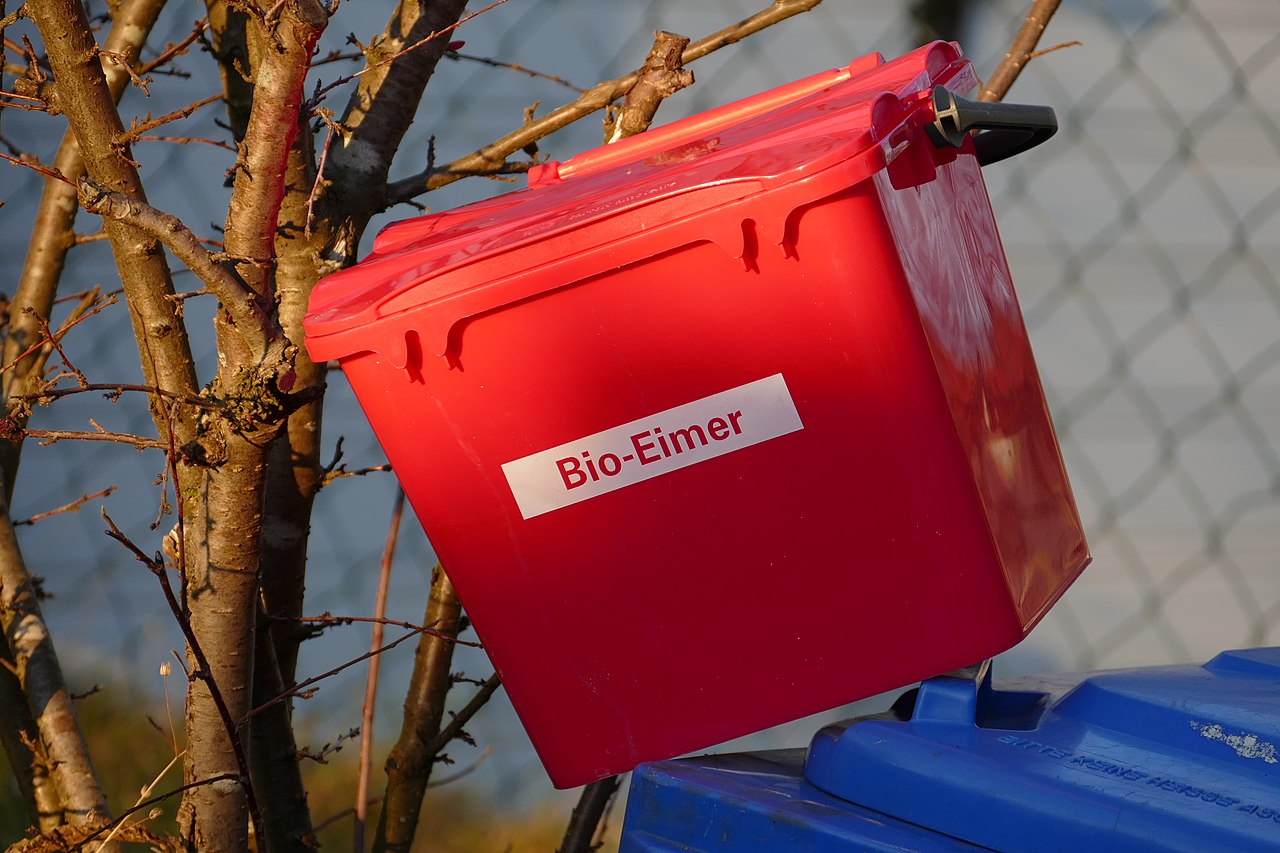
Wheelie bin photo by Kritzolina, Wikimedia Commons, CC BY-SA 4.0

The ammonia smell coming from your trash can is not random. It is a specific chemical reaction happening in a specific environment, and understanding it is the difference between spending an hour with the wrong cleaning product and actually fixing the problem.
Short answer: ammonia smell in trash cans comes from bacteria breaking down protein-rich waste (meat juices, pet waste, diapers, old milk, kitty litter) in a warm, moist environment. The bacteria convert urea and amino acids into ammonia gas as a byproduct. That gas concentrates inside the closed bin and hits you every time you lift the lid.
Bin smells like a litter box? Let the Bros clean it.
200°F water. No soap, no chemicals, pet-safe. We come to your curb and haul the funk away.
Book in 60 seconds — 50% off with FIRST50 →The chemistry, in one paragraph
Nitrogen-rich waste contains proteins and urea. When bacteria get to that waste, they metabolize the nitrogen compounds and release ammonia (NH3) as a waste product of their own. Warmth speeds the process up. Moisture gives the bacteria what they need to keep multiplying. A closed bin traps all of it and concentrates the gas.
This is the same reason wet diapers smell the way they do, why a litter box left too long is unbearable, and why an old carton of milk can stink out a kitchen. The smell is not the thing itself rotting — it is the bacterial byproduct.
Top sources of ammonia smell in residential trash cans
In order, from most to least common:
- Diapers and training pants. Urine breaks down to ammonia quickly in a warm bin. If you have kids in diapers and a garage-stored bin, this is almost certainly your main source.
- Pet waste. Dog bags, cat litter, bird cage liners. Pet urine is even more nitrogen-concentrated than human urine.
- Raw meat residue. Blood and meat juices contain amino acids. When they leak from trays or bags, they sit on the bottom of the bin and ferment.
- Old milk and dairy. Cheese rinds, yogurt containers with residue, spilled milk in a cereal box.
- Food scraps with fish or shellfish. These break down fastest and smell the worst.
If any of these have spilled inside the bin at some point and not been cleaned out, the bacterial colony is still there. Adding new trash on top does not reset it.
Why the smell gets worse in summer
Missouri summers are the perfect storm for bin odor. We see this every year across the KC Northland — Gladstone, Liberty, Parkville, Kearney, all of them.
Three factors:
- Heat: Bacterial reproduction roughly doubles for every 18°F increase in temperature until it hits a limit. A garage that's 95°F in July has bins with bacterial populations growing at four to eight times the rate they grow in April.
- Humidity: High humidity keeps residue from drying out. Dry residue is dormant. Wet residue is food.
- Closed lid: Most homeowners close the lid to keep rain and animals out. This traps the gas and creates the anaerobic pockets where the strongest-smelling bacteria thrive.
By June in most of the Northland, a bin that wasn't cleaned over winter is actively fermenting. By August, it's not a bin anymore. It's a bacterial ecosystem.
What does not fix ammonia smell
Before what works, a list of things that people try and that don't actually fix the problem.
Bleach alone. Bleach reacts with ammonia to create chloramine gas, which is toxic to breathe. Never mix bleach with anything that contains ammonia. Even if you avoid the reaction, bleach is designed to disinfect surfaces — it doesn't remove the organic buildup that bacteria are living on.
Baking soda in the bin. It masks the smell for a day or two by absorbing some gas. It does nothing about the bacterial colony producing the gas in the first place. The smell returns.
Dryer sheets. Same as baking soda. They mask. They don't fix.
The garden hose rinse. Cold water spreads the bacteria around the bin. It does not kill them. The smell usually comes back within 24-48 hours, often worse because moisture has been added without heat to neutralize anything.
Lysol spray. Surface disinfectant on a surface that has crusted-on organic material does not penetrate. You are spraying the lid. The problem is on the bottom.
What actually works
To stop ammonia smell from a trash can, you need to do three things in order:
- Remove the organic buildup mechanically. Whatever protein residue has dried or stuck to the interior has to come off. This takes pressure or serious scrubbing.
- Kill the bacterial colony. Heat or disinfectant applied after the mechanical removal. Order matters — disinfectant applied over dried food matter mostly gets absorbed by the food matter.
- Dry the bin thoroughly before closing it. Moisture in a closed bin is bacterial fuel. Leaving the lid open for a few hours on a sunny day finishes the job.
You can do this yourself with:
- A pressure washer (ideally with hot water)
- Heavy-duty gloves and eye protection
- A biodegradable cleaner (something like Simple Green, or a commercial-grade bin cleaner)
- 30-45 minutes per bin
- A way to capture the runoff so you don't contaminate your lawn or the storm drain
Or you can have it done by a service that runs hot water at pressure, captures the wastewater, and returns a bin that actually stops smelling. The math in our DIY vs. professional cost breakdown is more practical than most homeowners expect.
How often to clean to prevent it coming back
The smell returns because the bacterial colony rebuilds. Clean bins stay clean for roughly 6-10 weeks before the colony is back up to odor-producing levels, depending on what you're throwing away.
A reasonable schedule:
- Families with infants or pets: every 4-6 weeks (monthly service)
- Standard households: every 8 weeks (bi-monthly)
- Small households or people who bag almost everything: every 12 weeks (quarterly)
Most of our Northland customers end up on quarterly. The cleanings are frequent enough that smell never gets established, and the cost ($15/mo for four cleans a year) is less than the value of not having to think about it.
When to replace the bin instead
Sometimes a bin is just done. Signs you should replace rather than clean:
- Cracks in the interior wall. Bacteria get into the crack and can't be reached.
- Soft or warped plastic. The bin is degrading. New stains will keep appearing.
- Lid that no longer seals. Animals get in. That is a different problem but worth knowing.
- Age over 15 years. Plastic has microcracks you can't see. The colony lives inside them.
If the city provides your bin (many KC Northland municipalities do, including Liberty and Kearney), call the city to request a replacement. They usually swap it at no cost if it's damaged.
The single biggest mistake
Most people wait until the smell is unbearable before doing anything, and by then the colony has been growing for months. By cleaning on a schedule instead of a reaction, you prevent the smell from ever reaching unbearable.
It's the same reason dentists recommend cleanings every six months rather than waiting for a cavity. The math on prevention is always better than the math on reaction.
What to do this week
If your bin is already smelling like ammonia:
- Pull it out on a sunny day with the lid open. Heat and UV reduce bacterial activity fast.
- Empty any standing liquid. Tip it and let it drain onto pavement, not grass.
- Either clean it yourself with the method above, or book a first clean at half price — use code
FIRST50for 50% off your first service. Sign up here.
Most of the Northland is covered on our regular route. Liberty, Kearney, Smithville, Gladstone, Parkville, North Kansas City, and most of KC's Northland ZIPs (64116-64119, 64151-64158, 64161, 64163-64167). If you're outside that area, we have suggestions for local operators who can help.
Bin smells like a litter box? Let the Bros clean it.
200°F water. No chemicals. Pet-safe. No contracts. Code FIRST50 takes 50% off your first clean.