Is Trash Bin Cleaning Worth It? The Honest KC Math
August 26, 2026 · Bin Bros KC Team
Yes, you can clean your own trash bin with a garden hose. Most of our customers could too. The question was never whether it's possible — a trash can is not rocket science. The question is whether the full cost of doing it yourself beats the cost of hiring it out, and the answer depends on equipment you may already own, what your Saturday is worth, and one problem almost every DIY guide skips: where the dirty water goes.
Key takeaway: For a typical Northland home with no pressure-washing equipment, quarterly professional cleaning ($15/mo, $180/year for one bin — $200/year with the recycling bin added) costs less than doing it properly yourself with rented hot-water gear ($320–470/year), and about the same as half-hearted DIY that tapers off by July. DIY wins if you already own hot-water equipment, have a legal way to dispose of the wastewater, and actually enjoy the job. That's a real group of people. It's just a small one.
This is a math article. We'll lay out what both paths actually involve, when a service like ours is not worth it, and where the numbers flip.
Ran the math and would rather not scrub a trash can? Let the Bros clean it.
200°F water. No soap, no chemicals, pet-safe. We come to your curb and haul the funk away.
Book in 60 seconds — 50% off with FIRST50 →What "clean the bin" actually means
Before comparing prices, be clear about the deliverable. A properly cleaned trash bin has three things:
- No visible residue — inside or out. Everything that was stuck is gone.
- No bacterial colony — the stuff that causes smell. Heat has done its job.
- Dry interior — so next week's trash starts clean instead of landing on moisture.
A bin that doesn't hit all three isn't clean. It just looks cleaner for a day. This matters for the math, because cheap methods that skip #2 have to be repeated much more often.
Why the garden hose doesn't settle it
A garden hose runs at roughly 50 PSI, cold. Cold water moves bin gunk around; it doesn't kill what's living in it. Salmonella and E. coli both survive a cold rinse just fine, and the caked-on layer at the bottom barely notices. A consumer cold-water pressure washer (about 2,000 PSI) removes more of the visible mess, but the cold-water problem stays: the bin looks clean and still smells within a week or two, because the colony causing the smell is still there.
Water at 200°F kills salmonella and E. coli in under a second. That temperature comes from commercial hot-water equipment, not anything attached to a spigot. If the goal is a bin that stops smelling, heat is the whole game — which is why DIY that actually works costs more than most people expect.
The DIY path, priced in full
Equipment
Essential:
- Pressure washer (cold-water consumer unit: $150–300 to buy, $40–70 to rent for a day)
- Bin-safe cleaner ($10–20)
- Heavy-duty gloves ($8) and eye protection ($10)
For a clean that lasts:
- Hot-water pressure washer ($400–800 to buy, $80–120 to rent)
- A way to capture the wastewater (a tarp is not enough — see below)
- Clothes you're willing to sacrifice; bin residue stains permanently
Time
A thorough first-time clean runs 45–60 minutes per bin: setup, rinse, scrub, pressure-wash, disinfect, rinse again, dry, tear down. Experienced DIY-ers get it to 25–35 minutes. For two bins (most Northland homes: trash + recycling) and four cleans a year, budget 3–4 hours of labor annually.
The wastewater problem
This is the part most DIY guides skip. The water coming off a dirty bin carries bacteria, food residue, and whatever cleaner you used. Where it goes matters:
- Storm drains are out. They run to waterways untreated, and discharging wash water into them violates the Clean Water Act — federal law, not a local technicality.
- The lawn is legal but questionable. You're spreading bacteria-loaded water where your kids, pets, and vegetable beds live.
- Actually fine: a sanitary sewer connection — an indoor floor drain, utility sink, or toilet. Which means hauling or pumping dirty water into your house.
Most home setups have no clean answer here. People either do it illegally (driveway to storm drain), imperfectly (lawn), or give up and stop cleaning the bins. Professional trucks exist largely because of this problem: our wash water is captured on the truck and disposed of properly.
DIY math, one year
Assume you already own a cold-water pressure washer. Two bins, four cleans a year:
| Item | Cost |
|---|---|
| Cleaner (2 gallons) | $25 |
| Replacement gloves/mask | $15 |
| Water | $5 |
| Your time (3.5 hours at ~$30/hour) | $105 |
| Total, cold-water DIY | $150/year |
Cold-water DIY leaves the bacteria problem unsolved, so add the hot-water upgrade for a real comparison:
- Renting hot-water equipment 4 days a year: +$320, total ≈ $470/year
- Buying a hot-water unit ($400–800), spread over 3 years plus consumables and your time: roughly $300–400/year
The professional path
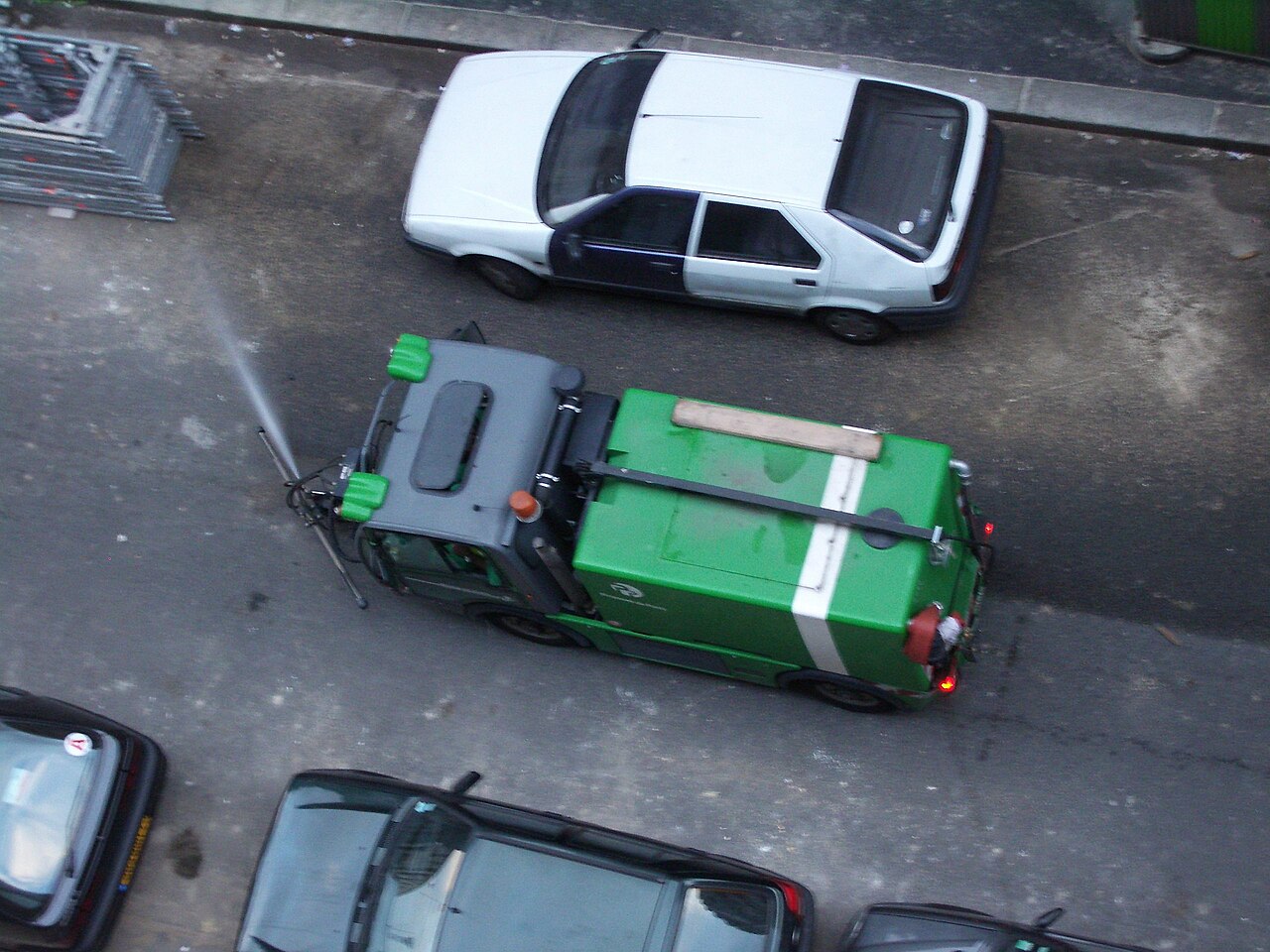
A truck arrives the day after your trash pickup. You don't need to be home. Your bins get cleaned curbside with 200°F water at 3,500 PSI, finished with a pet-safe deodorizer made with essential oils — no soap, no chemicals, no bleach. The dirty water leaves on the truck. About two minutes per bin, and your total annual time investment is the sign-up.
Bin Bros KC pricing — every subscription includes one bin (extra bins +$5 per clean):
| Plan | Monthly | Annual | Cleans/year |
|---|---|---|---|
| Quarterly | $15 | $180 | 4 |
| Bi-Monthly | $17.50 | $210 | 6 |
| Monthly | $25 | $300 | 12 |
| One-Time (single bin) | $75 | — | 1 |
Extra bins are +$5 each per cleaning on subscriptions, or +$15 on a one-time. Code FIRST50 takes 50% off your first clean on any plan — a first quarterly visit runs $22.50, and a two-bin one-time lands around $45 with the code. No contracts on any of it — just a 3-clean minimum, then cancel anytime.
When bin cleaning is NOT worth paying for
If any of these is you, don't hire us:
- You already own hot-water pressure-washing equipment for construction, detailing, or deck work. Your marginal cost is time and cleaner. DIY wins on money.
- You have a legal wastewater setup — a floor drain or utility sink you're willing to use for bin water.
- You enjoy the job. Some people find pressure washing deeply satisfying. That's a legitimate reason and the math can't argue with it.
- You have one small can — apartment-size, low volume, bagged-everything discipline. A hose rinse a few times a year may hold the line.
- Your bin is spotless. Some households bag meticulously and never miss. If that's you, carry on — we mean that.
When it IS worth it
- Two or more bins, which is most Northland households once recycling and yard waste count.
- No pressure washer, or cold-water only. Buying or renting your way to a real clean costs more than the service does.
- Your Saturday hours are worth more than $30 each — true for most working adults, and definitely true in July when the alternative is standing over a maggot situation in 95° heat.
- Pets or kids use the yard. The no-chemicals part matters here: heat does the sanitizing, and the only thing left behind is a pet-safe essential-oil deodorizer.
- You live near Smithville Lake or another watershed area where wastewater disposal rules have real teeth.
- Physical constraints. Wrestling a 96-gallon cart and a pressure washer is a two-hands-and-a-good-back job.
The break-even
For a typical Northland homeowner with no equipment:
- Rental-based hot-water DIY: $320–470/year
- Quarterly professional: $180/year (one bin; $200/year with the recycling bin added)
The service is cheaper before you count your time, and it's not close once you do. If you already own hot-water gear and have legal wastewater disposal, the picture changes: you're weighing about $45 in consumables plus 3.5 hours of your year against our $180 — so unless those hours are worth more than about $38 each to you, DIY wins on paper. If that's you, keep doing it yourself. What DIY can't match at any price is the part where you do nothing at all.
The pattern that costs the most
The most expensive path isn't DIY or professional. It's the one most homeowners actually take:
- Decide to DIY in April. Buy supplies.
- Clean once. Feel great.
- Skip May. Clean once in June — harder now, the residue had two months.
- Forget July. By August the bin is bad enough that cleaning it feels pointless.
- Pay for a one-time deep clean, and tell yourself next year will be different.
That pattern costs roughly what a quarterly subscription does, except the bins were only clean half the time. One-time cleans tend to get ordered only once the bin is already bad — which is exactly the cycle a subscription exists to break. What a subscription actually buys is that the cleaning happens on schedule whether you remember it or not.
Quick answers
Is trash bin cleaning worth it?
For most Kansas City households without pressure-washing equipment: yes. Quarterly service at $180/year for one bin ($200/year with the recycling bin added) costs less than doing the job properly yourself with rented hot-water gear, takes zero of your time, and solves the wastewater-disposal problem legally. If you own hot-water equipment and like the work, DIY wins.
Can I just clean my trash can with a garden hose?
You can rinse it, and it will look better. A garden hose is about 50 PSI of cold water, which moves bacteria around without killing them — the smell comes back within a week or two. Killing the colony takes 200°F water or a disinfectant soak plus legal disposal of the runoff.
Is it cheaper to clean bins yourself?
With equipment you already own, yes — about $150/year in supplies and time for cold-water results. Matching a professional hot-water clean means renting or buying hot-water equipment, which pushes DIY to $300–470/year. Quarterly service is $180/year for one bin, or $200/year with the recycling bin added.
Is bleach a good way to clean a trash can?
Bleach kills germs, but it's rough on grass and pets' paws, and rinsing it to the storm drain runs into the same Clean Water Act problem as bin wash water. Heat gets the same kill with nothing left behind. If you do use bleach, the runoff belongs in a sanitary drain, not the driveway. More in our bleach guide.
How much does professional bin cleaning cost in Kansas City?
Subscriptions run $15–25/month depending on frequency, with one bin included and extra bins +$5 per clean; a one-time clean is $75. Code FIRST50 halves your first clean on any plan. Full 2026 breakdown in our pricing guide.
What to do this week
- Run your own numbers. Equipment + supplies + time + a legal answer for the wastewater. If DIY comes out ahead for you, do that.
- If it doesn't, try one clean at half price. Code
FIRST50drops a first quarterly visit to $22.50. Sign up here. See what 200°F does to a bin that's been hose-rinsed for years. - Whatever you pick, pick a schedule. The bins don't care whether it's you or us. They care that somebody shows up in July.
Related reading: What bin cleaning costs in Kansas City, Subscription vs. one-time cleaning, The pressure-washing myth, and local guides for Liberty, MO and Kearney, MO.
Ran the math and would rather not scrub a trash can? Let the Bros clean it.
200°F water. No chemicals. Pet-safe. No contracts. Code FIRST50 takes 50% off your first clean.