Dirty Trash Can Bacteria: Salmonella, E. coli, Mold
April 18, 2026 · Bin Bros KC Team
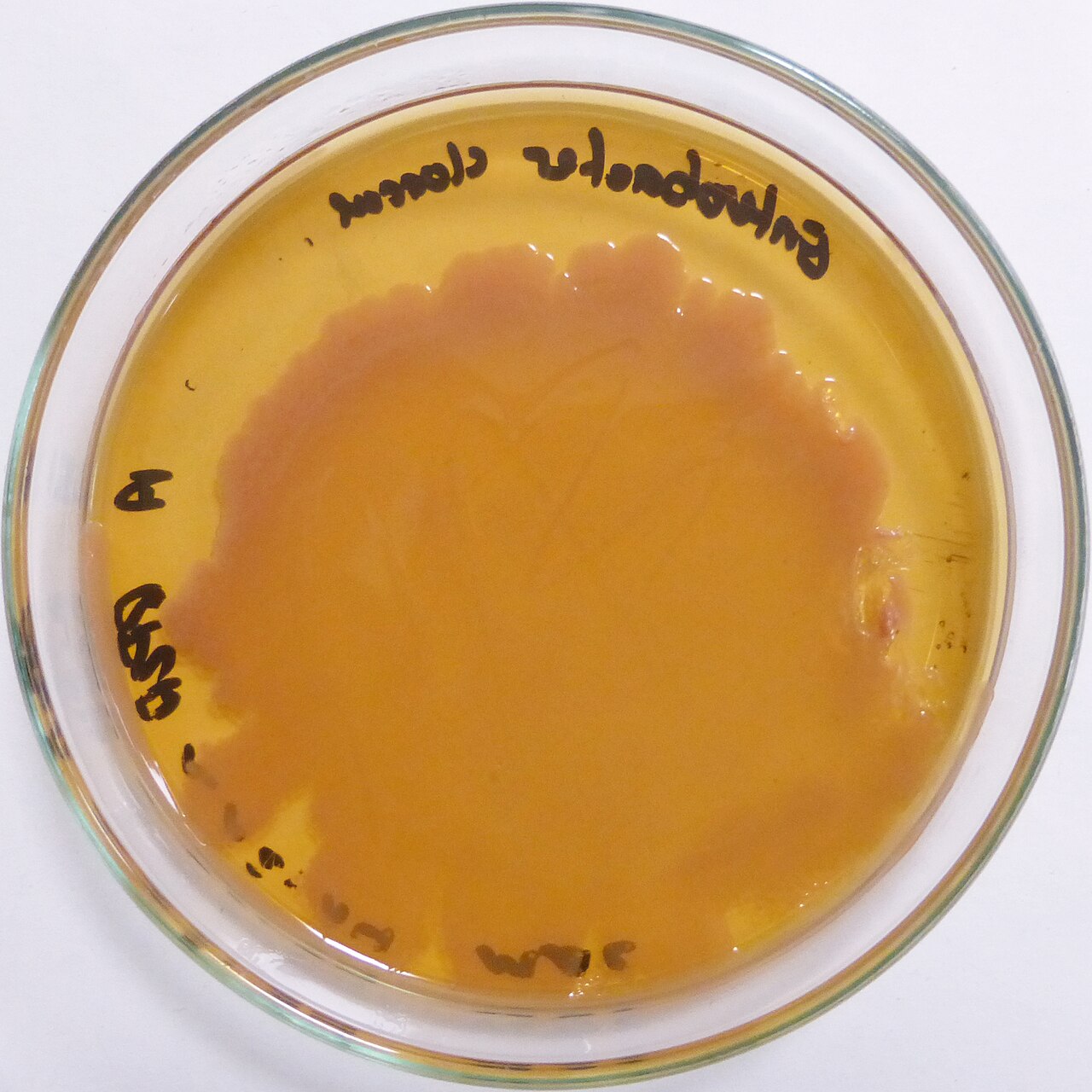
Bacterial culture plate by "A doubt", Wikimedia Commons, CC BY-SA 4.0

People assume their trash can is dirty. They don't usually think about what kind of dirty. The honest answer is closer to a microbiology textbook than most homeowners want to hear.
A 2019 study by the National Sanitation Foundation tested residential garbage bins and found an average of 411 different bacterial colonies per square inch of interior surface. For comparison, the same study found around 295 colonies on a typical kitchen sponge — which most people throw out monthly. The trash can sits there for years.
We're not writing this to gross anyone out. We just think the math behind why bin cleaning matters is more compelling than the usual marketing line. Here's what's actually living in there.
Salmonella and E. coli growing in your bin? Let the Bros clean it.
200°F water. No soap, no chemicals, pet-safe. We come to your curb and haul the funk away.
Book in 60 seconds — 50% off with FIRST50 →The five bacteria you'll find in nearly every trash can
These aren't theoretical. They're the species swabbed and identified across multiple residential trash audits in the US, UK, and Australia between 2018 and 2024.
Salmonella enterica. Comes from raw meat juice, raw eggs, and unwashed produce trim. Survives in cool, damp conditions for up to 4 weeks. The CDC attributes about 1.35 million Salmonella infections per year in the US. Most are foodborne, but cross-contamination from a shared bin is a documented secondary route.
Escherichia coli (E. coli). From raw vegetable scraps, dairy, and any pet waste that ends up in the household trash. Most strains are harmless. The dangerous strains, like O157:H7, can survive in damp organic matter for over 60 days.
Listeria monocytogenes. Loves cold, wet environments — exactly what the bottom of a trash can looks like in March. Especially common in bins that have held deli meat, soft cheese, or bagged salad waste. Listeria is the third leading cause of food poisoning deaths in the US, mostly because it grows happily at refrigerator temperatures.
Pseudomonas aeruginosa. This is the one responsible for that distinctive sour-sweet bin smell. It produces a pigment called pyocyanin and forms biofilms — those slick films you can feel on the bottom and sides of a bin you haven't cleaned in months. Pseudomonas is a known opportunistic pathogen for people with compromised immune systems.
Klebsiella pneumoniae. Found in the residue from raw poultry packaging and human food waste. Antibiotic-resistant strains have spread in the last decade. Klebsiella in a household bin isn't going to make a healthy adult sick, but for households with infants, the elderly, or anyone on chemotherapy, it's worth taking seriously.
Why your bin is the perfect bacterial growth chamber
A residential trash can hits every variable bacteria want:
- Steady moisture. Even in dry weeks, trash bags leak. The bottom of a bin is almost never fully dry.
- Organic food. Scraps, juice, the residue from torn bags. Endless calories.
- Stable temperature. A garage or driveway bin sits between 50°F and 95°F most of the year. That's the sweet spot for nearly every common foodborne pathogen.
- Darkness. Closed lid, no UV. UV light kills bacteria; bin lids prevent it.
- No competition. A clean ecosystem has competing microbes that keep any single species in check. A trash can is the opposite — whichever species got there first grows unopposed.
Combine those five conditions and you have a bacterial petri dish that's been incubating since the last time the bin was actually cleaned. Which, for most KC Northland households, means since the day it was delivered.
What this looks like in practice
If you've ever cleaned out a trash can yourself, you know the signs. Sticky black film on the bottom. A smell that doesn't go away even after the trash is gone. Maggots in summer (those come from the bacteria attracting flies — see our maggot prevention guide for the cycle).
What you can't see is the biofilm: a structured colony where bacteria have built physical scaffolding to protect themselves from soap, rinsing, and most household cleaners. Once a biofilm establishes, normal cleaning barely touches it. You can rinse the bin with a hose, watch the water run brown, and still leave 80% of the bacterial mass intact.
Three signs your bin has crossed into biofilm territory:
- The bottom feels slippery even when it looks empty. That's the polysaccharide matrix bacteria secrete. It's slick by design.
- The smell returns within a day of taking the trash out. Surface residue evaporates; biofilm doesn't.
- A pressure-washer rinse from above doesn't fully clean it. Biofilm needs hot water and surfactant to break apart, not just water pressure.
What actually kills it (and what doesn't)
There's a lot of bad advice circulating about bin cleaning. Some methods make the problem worse.
Bleach: don't. Pouring bleach into a trash can is one of the most common DIY mistakes. Bleach reacts violently with ammonia (which, as we covered in why trash cans smell like ammonia, is constantly present in residential bins from urine, food waste, and decomposition). The reaction produces chloramine gas — a respiratory irritant that's sent more than a few people to urgent care. We wrote a longer piece on why bleach in a trash can is a toxic mistake if you want the full chemistry.
Cold water hose rinse: barely effective. Cold water removes surface debris. It does almost nothing to biofilm. Bacteria laugh at 60°F water.
Vinegar: marginal. Vinegar's acidity (around pH 2.5) does kill some surface bacteria. It does not penetrate biofilm. It also doesn't deodorize — it just trades one smell for another.
Hot water plus surfactant: this is what works. Bacteria membranes break apart at temperatures above 160°F. Most household water heaters max out around 120°F, which is why DIY rarely gets clinical-level results. Industrial bin cleaning uses 200°F water at 3,500 PSI — that combination physically blasts apart the biofilm and chemically denatures the proteins keeping bacteria alive.
That's what our trucks do. Not because it's marketing, but because anything less doesn't actually kill what's in there.
Frequency: how often you actually need a clean
Based on bacterial growth curves, here's a realistic schedule:
| Household | Recommended frequency |
|---|---|
| Single adult, mostly cooks at home | Every 3-4 months |
| Family of 4, normal cooking | Every 2-3 months |
| Pet household (dog or cat) | Every 6-8 weeks |
| Diapers in the household | Every 4-6 weeks |
| Anyone immunocompromised | Monthly |
Our Quarterly plan — 4 cleanings per year — handles most KC Northland households. Pet owners and growing families usually graduate to bi-monthly within a year. The math is simple: bacteria recolonize a clean bin in about 8-10 weeks under typical KC summer conditions. Cleaning every 12 weeks keeps it manageable. Cleaning every 6 weeks keeps it close to sterile.
What about the outside of the bin?
The interior is where the bacteria live. The exterior is where they get tracked into your garage, onto your hands, and sometimes inside your house.
When trucks dump a bin, the exterior gets sprayed with whatever leaked out during transport plus whatever's in the truck itself. That residue is more concentrated than what's inside an individual bin — it's the combined leakage from every bin on the route. Most people grab the bin handle without thinking, then touch a doorknob, a phone, a sandwich.
Pro bin cleaning sanitizes the exterior too. That's not optional in our process. The handle, the lid edges, and the wheel hubs all get the same 200°F treatment.
The honest answer to "is this really necessary?"
If you don't have pets, kids, or immune issues, and you don't mind the smell, you can technically go years without ever cleaning the bin. The bacteria won't kill a healthy adult.
But the bacteria are real. The smell isn't psychological. And the cost difference between living with it and handling it is small — about $15 a month for our Quarterly plan, less than a single coffee shop visit per week. We'd rather be honest about what's in there and let you decide.
If you want to see how this compares to other approaches, DIY vs. professional bin cleaning breaks down the actual cost and labor difference. If you're in the KC Northland and want to know your trash day so you can plan around our cleaning schedule, find your trash day on the map.
Or skip the research and just book your first clean for $22.50 — code FIRST50 is 50% off the standard $45.
Salmonella and E. coli growing in your bin? Let the Bros clean it.
200°F water. No chemicals. Pet-safe. No contracts. Code FIRST50 takes 50% off your first clean.