Frozen Trash Bags: Why They Stick and How to Fix It
May 26, 2026 · Bin Bros KC Team
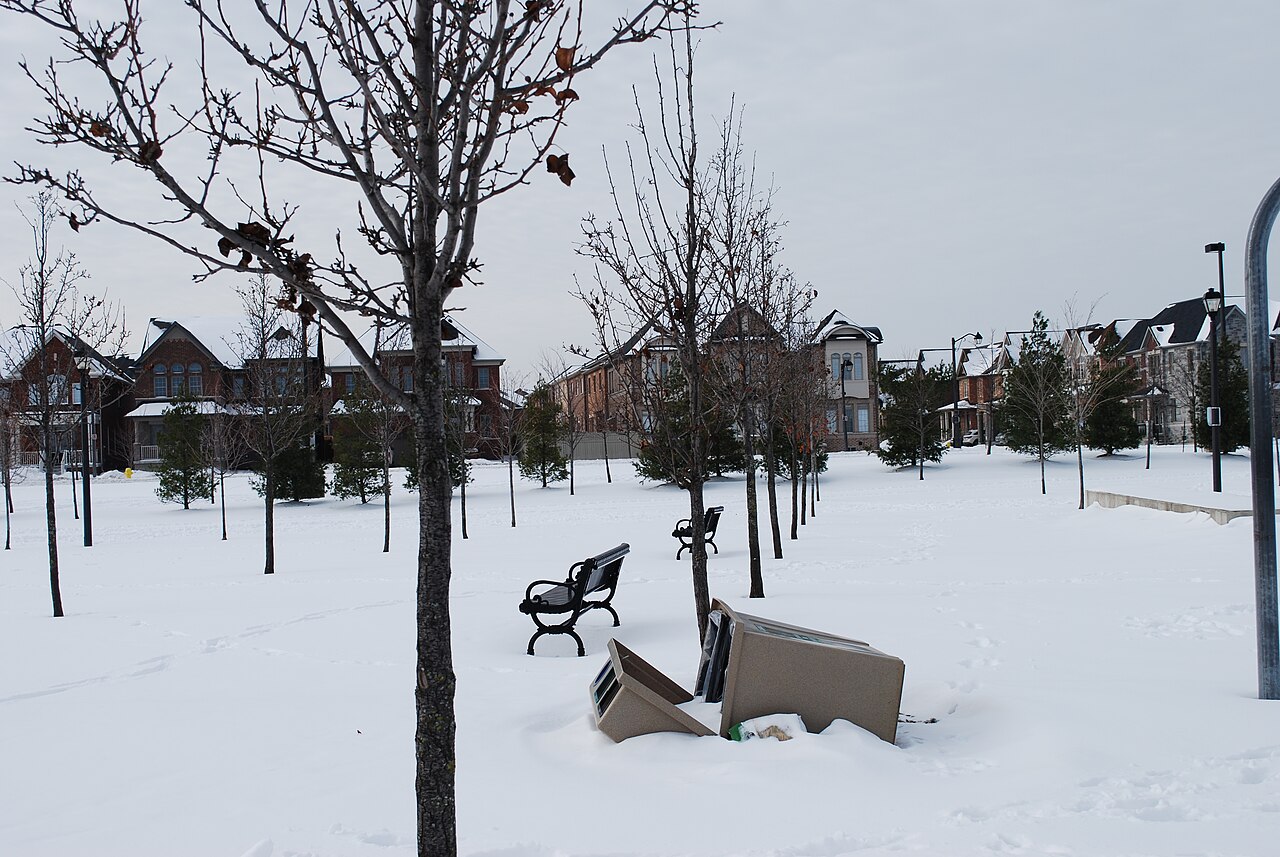
A trash can knocked over and sitting in fresh winter snow by Enoch Leung from Canada, Wikimedia Commons, CC BY-SA 2.0
.jpg)
Most KC Northland homeowners think winter is the easy season for trash bins. No smell, no flies, no maggots. The bin sits in the cold and nothing happens. It's a reasonable assumption — and it's wrong in a specific way that costs you the entire next summer.
The issue is the frozen bag. From late December through mid-February, KC Northland nights regularly drop into the single digits and afternoon highs hover near freezing. Bags that get wet — and most do — bond to the inside of the bin. On pickup day the truck shakes the bin, the bag stays stuck, the bag tears, and a layer of residue gets left behind. That residue freezes, thaws, freezes, thaws, and by April it's a bacterial seedbed waiting for the first warm week.
Here's what's actually happening in your bin from January through March, and the practical winter prep that keeps it from turning into a June problem.
Frozen sludge in the bottom of your bin? Let the Bros clean it.
200°F water. No soap, no chemicals, pet-safe. We come to your curb and haul the funk away.
Book in 60 seconds — 50% off with FIRST50 →Why KC Northland is worse for frozen bags than colder cities
You'd think Minneapolis or Bismarck would have this problem more than Liberty or Gladstone does. They don't, and the reason is the freeze-thaw cycle.
A bin in Minneapolis stays frozen solid from late November through March. Whatever's in there is one continuous block of ice until spring. A bin in Kansas City goes through 40 to 60 freeze-thaw cycles in a typical winter. Daytime temperatures cross 32°F several times a week even in January.
That cycling is what destroys things. Concrete cracks faster in freeze-thaw climates. Roads pothole faster. And trash bags — which are 80% water by weight once they include food scraps and liquids — refreeze and re-bond to the bin floor every cold night.
The bag isn't just frozen. It's been wet, partially thawed, and refrozen four or five times before pickup day arrives. By then it's effectively laminated to the bin.
What goes wrong on pickup day
The pickup mechanism on a modern garbage truck — the automated arm that grabs the bin, lifts it, and tips it into the hopper — gives the bin a hard shake. On a normal day, the bag slides out. In winter, the bag stays put.
Three failure modes follow:
The bag tears. The truck shakes harder, the plastic gives way somewhere along the bottom, and the contents above the freeze line dump out. The bottom layer — meat juice, coffee grounds, the actual problem layer — stays in the bin. The driver moves on.
The whole bag stays. Worse outcome. The bin comes back to your curb with the bag still in it. Now the bag sits for another week, getting wetter every time snow melts off the lid.
The bin gets dragged. If the driver notices and tries to free the bag manually, the bin sometimes gets dragged across the gravel of your driveway or banged on the curb. Cracks start at the bottom corners and spread.
We've replaced bins for customers in Liberty, Gladstone, and Smithville specifically because of winter freeze damage. The bin survives ten Kansas City summers and dies in one cold February.
The residue layer: why it matters in May
If a winter bag tears and leaves residue behind, that residue freezes in place. You can't see it — the next bag goes in on top, the lid closes, the bin looks fine.
Then spring arrives. Internal bin temperatures climb above 40°F sometime in late March. The residue thaws. Now you have a bacteria-friendly food source sitting in a closed, increasingly warm container.
This is the seed for the bacterial buildup we wrote about in this article. It's also why a bin can be cleaned in November and still smell terrible by mid-April — the layer was deposited mid-winter, invisible until thaw.
By July, that bin will smell, attract flies, and probably produce the ammonia-style odor we covered here. The ten minutes of winter prep you skip in January becomes the cleanup project you can't avoid in June.
The seven-step winter prep that prevents it
This is what works. Most of it costs nothing and takes under two minutes per pickup day.
1. Line the bin floor with cardboard
Single highest-impact change. A flattened cardboard box (cereal box, Amazon box, anything) on the bottom of the bin creates a barrier between any bag liquid and the bin floor.
When the bag freezes, it freezes to the cardboard instead of the bin. The cardboard usually falls out with the bag when the truck shakes it. If a piece stays behind, you can lift it out by hand the next week — far easier than scraping frozen meat juice.
Replace the cardboard after each pickup. Free, fast, dramatically effective.
2. Double-bag anything wet
In summer this is about flies. In winter it's about ice bonding.
- Always double-bag: raw meat packaging, anything with blood or liquid, leftover soup or stew, ice from coolers, dog waste in wet weather, kitty litter that's been peed on.
- Use grocery bags as the inner bag, then the main kitchen bag over it.
The inner bag traps liquid before it can freeze to the outer bag's exterior. When the outer bag eventually freezes to something, it's freezing to itself — not to your bin.
3. Don't bag warm food
This is counterintuitive but matters. If you finished a pot of chili at 8 p.m. and dumped the leftovers into the kitchen trash bag, that heat will partly thaw whatever's already frozen in the outdoor bin when you take the bag out.
Let warm food cool to room temperature in the fridge first. Then bag it cold. A cold bag dropped on top of a frozen bag stays as a discrete unit. A warm bag fuses to the layer below it.
4. Take trash out the morning of pickup, not the night before
In summer this is about fly exposure. In winter it's about freeze time.
A bag dropped in the outdoor bin at 6 p.m. on Sunday for a Monday morning pickup gets 13 cold hours to bond. A bag dropped in at 7 a.m. on Monday morning gets one hour, much of it during the warmest part of the day.
If you're on Liberty's Monday route, Smithville's Tuesday route, Kearney's Tuesday route, or any of the other Northland schedules in our trash day guide, the morning-of rule cuts freeze time by 90%.
5. Bang the bin before pickup
Old waste hauler trick. On the morning of pickup, give the bin a hard sideways shove or a knock with your foot before you wheel it to the curb.
The shock breaks any bond that's already formed overnight. If the bag is going to come unstuck, this is what unsticks it before the truck has to. The driver appreciates it. The bin survives.
6. Keep the bin under cover when possible
A bin sitting in the open accumulates snow on the lid, which melts into the bin during warm spells and refreezes overnight. That water is what creates the freeze problem.
If you have a garage, keep the bin in the garage until pickup morning. If not, a covered porch, a carport, or even a tarp draped over the bin between pickups dramatically cuts moisture entry.
This isn't always practical — many Northland houses have detached garages or no covered storage — but it's worth doing when you can.
7. Don't bother with bin liners marketed for winter
You'll see ads for thick rubber or plastic bin liners marketed as freeze-resistant. They don't work the way they claim. The bag still freezes to the liner; you just have to clean a liner instead of a bin. And most don't fit a standard 95-gallon municipal cart.
Cardboard is better in every way: cheaper, replaceable, biodegradable, fits any bin shape.
What to do if a bag stays in your bin
It happens. The truck couldn't get it out, and the bag is sitting there, frozen to the bottom of your bin.
Don't try to pry it loose while it's still frozen. You'll either tear the bag in a worse spot or crack the bin.
Wait for a warm day. When afternoon highs hit 45°F or above, wheel the bin into the sun. Lay it on its side, lid open, for two to three hours. The bag will release.
Lift the loosened bag out with the lid closed. The bag stays in the bin, you close the lid, lift the whole thing, and tip the bin sideways. Gravity does the work. Don't reach in — the bag exterior in this state is the worst surface in your home.
Rinse the bin floor with hot water. Boil a kettle, pour it into the empty bin while the bin is tipped on its side, let the water carry the residue out. Repeat once.
If the bin smells after that, schedule a deep clean. Cold-water rinse doesn't sanitize. Hot-water professional cleaning at 200°F does. That's what we do.
The May connection (why this article matters)
Everything we've written here is preventive — set up your January and February correctly, and your April and May are easy. Skip it, and your spring cleaning checklist goes from a 30-minute job to a 90-minute job, and your pre-summer maggot prevention starts a step behind.
Most Northland homeowners we talk to in June trace their bin problem back to a single bag that tore in February. They couldn't see it at the time. They smelled it five months later.
What to do this week
Winter isn't over in KC until late March some years. If we're still seeing freeze warnings:
- Drop a piece of cardboard in your bin before the next pickup. Takes 30 seconds.
- Double-bag anything wet for the rest of the season.
- If you missed all winter and the bin already smells, book a professional clean — code
FIRST50gets your first clean at half price. Sign up here.
Worth knowing how our winter schedule works: bins barely smell in the cold, so quarterly and bi-monthly plans skip January and February and bank those visits for December and March — the months that bracket the freeze and actually need them. Monthly plans, one-time cleans, and new signups run all winter.
We cover Liberty (64068), Kearney (64060), Smithville (64089), Gladstone (64118-64119), Parkville (64151-64152), and most of the Northland. We come the day after your regular pickup, hot-water sanitize the bin on your driveway, and capture the wastewater so nothing goes down your storm drain.
For most families, winter prep takes about three minutes of extra effort per pickup day. The bin survives, the spring smell never starts, and the June project doesn't exist.
Related reading: Why trash cans smell like ammonia, Bacterial buildup in trash cans, Spring cleaning your trash can in KC, and the full KC Northland trash day guide.
Frozen sludge in the bottom of your bin? Let the Bros clean it.
200°F water. No chemicals. Pet-safe. No contracts. Code FIRST50 takes 50% off your first clean.