Opossums in Your Trash in Missouri: What to Do
April 18, 2026 · Bin Bros KC Team
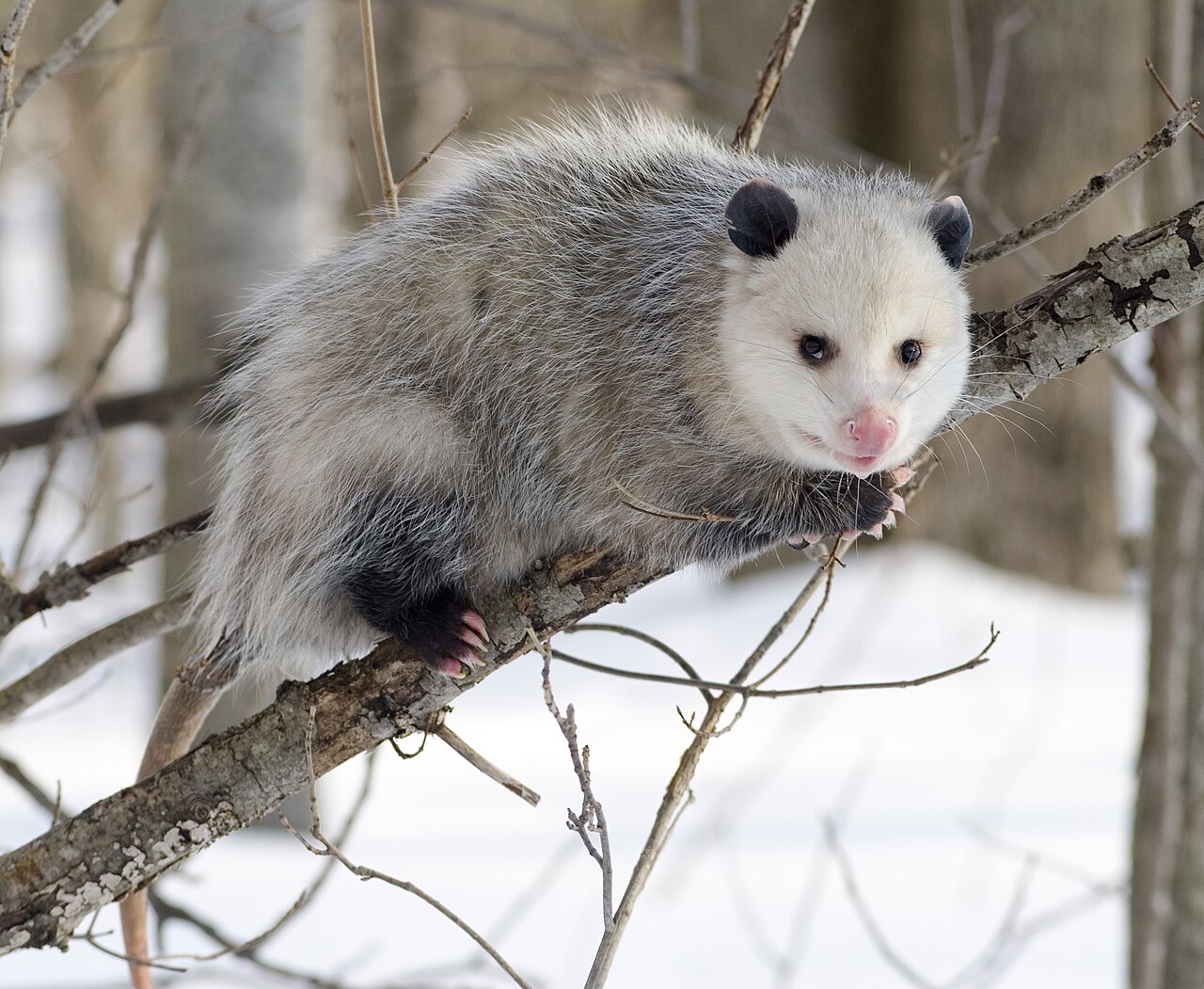
A Virginia opossum — North America's only marsupial and a frequent garbage visitor by Cody Pope, Wikimedia Commons, CC BY-SA 2.5

Opossums in trash cans look more alarming than they are. If you've opened the bin and seen a grayish animal with a pointed face and a scaly tail staring back at you — hissing, drooling, or playing dead — that's an opossum (Virginia opossum, Didelphis virginiana), North America's only marsupial, and probably the most misunderstood animal on your block.
Here's the reality of what they do, what they don't do, and how to keep them out of your trash without harming them.
Something living in your trash? Let the Bros clean it.
200°F water. No soap, no chemicals, pet-safe. We come to your curb and haul the funk away.
Book in 60 seconds — 50% off with FIRST50 →What opossums are (and aren't)
What they are: nocturnal scavengers that eat insects, small rodents, fallen fruit, pet food, and — yes — trash. They're solitary, slow-moving, and will "play dead" (a defense called thanatosis) when threatened.
What they aren't:
- Rabid. Opossums rarely carry rabies. Their body temperature is too low for the rabies virus to thrive.
- Aggressive. They hiss, show teeth, and drool to look scary, but they almost never attack unless cornered.
- Rats. They're marsupials, not rodents. They're more closely related to kangaroos than to mice.
- A serious threat to pets. Dogs and cats usually leave opossums alone after the opossum plays dead.
- Vermin. Many wildlife biologists consider them net-positive for suburban yards because they eat ticks, roaches, and other pests.
Why they show up in KC Northland trash
Three reasons:
- Available food. Opossums are opportunistic eaters. Food residue in an unsealed bin is easy calories.
- Low competition. Raccoons dominate trash in most Northland yards. Opossums tend to show up when raccoons haven't been by, or in yards where raccoon activity is low.
- Shelter access. Some opossums den near humans because predator pressure is lower. An outdoor bin can be a shelter option if the lid is partly open or the bin is tipped over.
Peak Northland opossum activity is March through October, with most residential trash encounters happening May through September.
Are they actually harmful?
In the trash can context, the answer is usually no — with caveats.
The harmless part:
- They don't carry rabies (rare exceptions exist but the overall rate is extremely low)
- They rarely bite unless cornered
- They don't spread disease through the bin itself in any meaningful way
- They don't cause structural damage to trash bins
The caveats:
- They can carry leptospirosis, which spreads through urine. Washing hands after touching any wildlife or wildlife-contaminated surface is sensible.
- They may carry fleas that can transfer to pets.
- Their feces (if left in the bin) can contain parasites that affect pets if ingested.
- A dog that catches an opossum can get scratched or bitten during the struggle. Not common but possible.
Bottom line: the opossum in your bin is not dangerous to you by its presence. The bin may need cleaning after, and you should keep pets away from direct contact.
How to get an opossum out of a trash can
If you find an opossum alive in your bin (rare but it happens):
- Don't close the lid with it inside. Opossums are slow and can overheat or starve.
- Tip the bin on its side with the opening facing away from you.
- Move to a distance of 15-20 feet and wait.
- The opossum will leave on its own within 10-30 minutes. They're not fast and not aggressive — they just need a clear path out.
- Clean the bin after. Follow our maggot removal guide for the cleaning process even if there aren't maggots — the same method works for wildlife contamination.
Do not:
- Trap or relocate opossums without a permit. In Missouri, this is regulated by the Department of Conservation.
- Spray the opossum with water or chemicals.
- Harm the animal. Opossums are legally protected game animals in Missouri outside of hunting season.
How to prevent opossums from getting in
Same principles as raccoon deterrence, just slightly lower effort needed because opossums are less persistent.
1. Close and secure the lid
A basic latched or bungee-strapped lid will keep most opossums out. They don't have the manual dexterity raccoons do — a lid that's harder to open usually defeats them entirely.
2. Keep the bin clean
Opossums, like raccoons, are drawn by scent. A clean bin that doesn't smell like food gets checked less often. See our ammonia smell guide for the cleaning angle.
3. Take trash out morning-of
Leaving bags out overnight gives every Northland scavenger a target. Morning-of disposal minimizes opportunity.
4. Remove nearby food sources
Opossums often hang around yards with:
- Pet food left out overnight
- Unsecured compost bins
- Fallen fruit from trees
- Bird seed spillage under feeders
Removing these reduces opossum traffic even if your bin is already secure.
5. Bright motion lights
Opossums are nocturnal and prefer dark. Motion-activated lights near the bin discourage visits. $25-40 LED fixtures at any hardware store.
Opossums vs. raccoons: which are you dealing with?
If you're not sure which is getting into your bin, here's how to tell:
| Sign | Opossum | Raccoon |
|---|---|---|
| Behavior if caught | Plays dead, hisses | Runs or fights |
| Droppings | Dark, smooth, medium-sized | Tubular, often contains seeds/berries |
| Tracks | Four-toed, star-like | Five fingers, hand-like |
| Lid damage | Minimal (can't really open lids) | Often (manual dexterity) |
| Trash scattered | Less common | Common — they dig through |
| Time of night | Late (after 10pm usually) | Any time after dark |
If your bin is being opened and trash is spread across the yard, it's almost certainly a raccoon. If the bin is just tipped and an animal is inside when you find it, more likely opossum.
The raccoon deterrent guide has more on the more-destructive scenario.
The "should I be worried about pet safety?" question
For dogs and cats, the main risks from an opossum encounter are:
- Physical injury from the fight (bites or scratches during a struggle)
- Flea transfer (opossums sometimes carry fleas; ask your vet about prevention)
- Rarely, leptospirosis (from contact with urine; current leptospirosis vaccines for dogs cover this)
For kids: keep them away from direct contact. Opossums are not pets, even when they look docile. Teach kids to call an adult if they see one in the yard.
For chickens or small livestock: opossums will occasionally take eggs or very small birds. If you have a chicken coop, secure it at night. Opossums are rarely the primary predator threat — raccoons, coyotes, and foxes are more concerning.
When to call wildlife control
Most opossum encounters don't require professional help. Call a licensed wildlife control operator if:
- There's an opossum denning under your deck or in your attic
- You've had repeated opossum encounters in the same week
- The opossum appears sick (stumbling, foaming, active in daytime)
- A child has been bitten or scratched
In Missouri, the Department of Conservation can advise on who to call. A licensed operator handles humane removal and relocation.
What to do this week
If opossums have been getting into your bin:
- Secure the lid tonight with a bungee cord or latch. Usually enough on its own.
- Check the bin for other attractants — pet food stored outside, etc.
- Book a cleaning if the bin is smelling enough to attract wildlife. Code
FIRST50for 50% off your first clean. Sign up here.
Opossums are low-drama wildlife. Secure the bin, clean it when needed, and you'll rarely see them again.
Related reading: Raccoons in your trash: Northland deterrents, Why trash cans smell like ammonia, Is your dirty trash can making your dog sick?, and local service guides for Liberty, Gladstone, and Parkville.
Something living in your trash? Let the Bros clean it.
200°F water. No chemicals. Pet-safe. No contracts. Code FIRST50 takes 50% off your first clean.