How to Keep Raccoons Out of Your Trash in KC
April 17, 2026 · Bin Bros KC Team
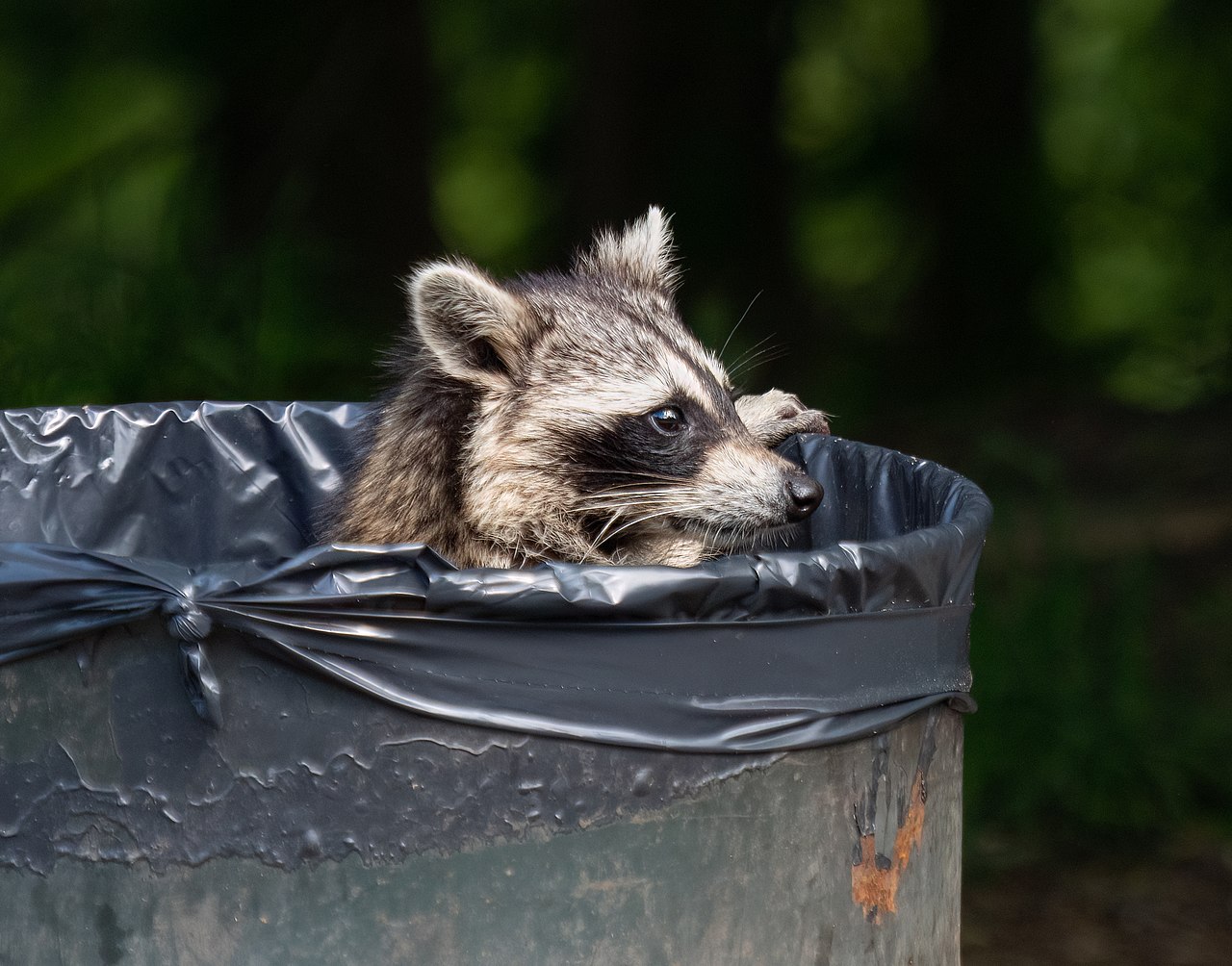
A raccoon exploring a residential garbage can by Rhododendrites, Wikimedia Commons, CC BY-SA 4.0
.jpg)
Raccoons are one of the most consistent wildlife complaints we hear from Northland homeowners. Brooke Hills, Staley Farms, Gladstone, the older streets around Happy Rock Park — the raccoons are clever, persistent, and in many neighborhoods, they've learned exactly which bins reward them.
Here's what actually works to keep them out, based on what we've seen across thousands of bins in Clay and Platte County.
Raccoons raiding your bin? Let the Bros clean it.
200°F water. No soap, no chemicals, pet-safe. We come to your curb and haul the funk away.
Book in 60 seconds — 50% off with FIRST50 →Why the Northland has more raccoon activity than most suburbs
A few reasons:
Water access. Raccoons need regular water and stay close to it. The Northland has the Missouri River, Smithville Lake, the Little Platte River, and Fishing River all cutting through it. That's a lot of raccoon-friendly territory.
Tree cover. Older Gladstone, downtown Liberty, Parkville's bluff areas — mature tree canopies give raccoons travel corridors and denning spots. They don't need to be in the woods to feel at home.
Mix of densities. Dense-enough neighborhoods to have trash, sparse-enough yards to give raccoons cover. The transition zones (Platte City, Pleasant Valley, rural Clay County, the edges of Kearney) are especially active.
Learned behavior. Raccoons live 2-3 years in the wild and pass behavior to their young. If a raccoon family has been opening bins on your street for several generations, that knowledge is local. You're not solving a raccoon problem — you're solving a specific line of raccoons that know your block.
What raccoons are actually looking for
Not "trash." Specifically: protein. Raccoons have a strong preference for meat scraps, bone marrow, fat, and dairy over vegetables or cardboard. If your bin has ever had:
- Raw or cooked meat trimmings
- Chicken bones
- Pizza boxes with grease
- Dog food
- Fish scraps
...the raccoons know. Their sense of smell is strong enough to detect residue that's been dried on the bin interior for weeks.
This is the part most homeowners don't realize: you don't need fresh meat in the bin for raccoons to be interested. The residue left behind from past meat disposal is enough to keep them checking the bin nightly.
What actually keeps raccoons out
In order of effectiveness:
1. Clean the bin (the part most solutions skip)
If your bin still smells like meat to a raccoon — even faintly — the other deterrents have to work harder. Raccoons check multiple bins per night. The one that doesn't smell like food gets skipped.
Hot water at pressure removes the residue other cleaning can't. This is the underrated part of raccoon prevention: if the bin doesn't smell like food, raccoons lose interest in the bin regardless of what deterrents you use.
Most of our Northland customers with raccoon problems report significant reduction after the first clean, even before adding any other deterrent.
2. Lock the lid
The physical barrier is still the most reliable deterrent. Options:
- Bungee cord across the lid. Cheap. Works for basic raccoons.
- Ratchet strap over the top. Works for smarter raccoons.
- Commercial bin lock (widgets like the Rugged Ranch or Strong Hold). Designed specifically for this. $15-30.
- Cinder block on top. Works. Looks bad. Kansas raccoons eventually figure it out.
One note: don't use a lock so tight that your municipal waste hauler can't pick up the bin. Most Liberty, Kearney, and KC municipal routes require unlocked bins at the curb on pickup day. Lock them overnight, unlock them in the morning.
3. Move the bin indoors or into a secure area
A bin in a closed garage, a shed, or a fenced pen is immune to raccoons. Not everyone has the space, but if you do:
- Garage storage is best. Keeps bin out of heat and rain too.
- Fenced bin pen (two walls + a lid, no front) handles the space constraint.
- Behind a secured gate works if the gate is taller than a raccoon can climb.
4. Take trash out the morning of pickup
Same rule as for flies and maggots. Waste sitting overnight in a bin outside is an invitation. Bringing the bin out in the morning cuts exposure hours dramatically.
5. Bright motion-activated lights
Raccoons are nocturnal and prefer cover. A motion-sensor floodlight near the bin disrupts their comfort enough to send them elsewhere on most nights. Not a 100% solution, but a good addition.
LED spotlights with PIR sensors run $25-40 at any hardware store. Solar versions work for areas without nearby outlets.
6. Scent deterrents (the actually-effective ones)
Some scents disrupt raccoon interest. Effectiveness varies and they have to be reapplied after rain. But these are the ones with real evidence:
- Ammonia-soaked rags placed near the bin (not in it — ammonia + decomposing food + metal lid can create chloramine gas)
- Cayenne pepper sprinkled around the bin perimeter
- Predator urine (coyote or fox) sold at hunting supply stores
Scents that don't work despite common belief: mothballs (ineffective and toxic), peppermint oil (raccoons don't care), human hair (old wives' tale).
Deterrents to avoid
Ultrasonic repellers. Raccoons adapt within days. Save your money.
Rubber snakes or owl decoys. Work for a week. Raccoons figure it out. A raccoon living on your block sees through the prop within 2-3 visits.
Feeding them to make them leave. Common well-intentioned mistake. Fed raccoons become more confident and more numerous.
Poisoning or trapping. Illegal in most of Missouri without a permit, and it doesn't solve the problem — another raccoon family moves into the vacated territory within weeks. Also inhumane.
What about raccoons with babies?
April through July is kit season. If you see a mother raccoon with babies, she's harder to deter because she needs more calories to nurse. She's also more likely to be living in a den on your property.
Signs of a raccoon denning near you:
- Noise in chimneys or attics at night
- Claw marks on siding or fascia
- Droppings in one consistent area (raccoons have communal "latrines")
If you suspect a raccoon family is living on your property, call Missouri Department of Conservation or a licensed wildlife control operator. Removing a mother while her babies are hidden in your attic is the worst outcome — they'll die, decompose, and create an entirely different problem.
The case for combining deterrents
Single deterrents have a 30-60% effectiveness rate in most Northland neighborhoods. Combined deterrents go much higher:
- Clean bin + locked lid + morning trash-out = 85%+ reduction
- Clean bin + locked lid + motion light + morning trash-out = 95%+ reduction
- Indoor bin storage = effectively 100%
Most homeowners overweight the lock and ignore the cleanliness. The cleanliness part is where regular service matters — a bin professionally cleaned on a quarterly schedule never has the accumulated meat residue that attracts raccoons in the first place.
Local context: Northland neighborhoods with the most raccoon reports
Based on customer feedback (not scientific, but directional):
- Gladstone (especially around Happy Rock Park and Maple Park)
- Liberty (Brooke Hills, Liberty Oaks — near wooded areas)
- North Kansas City (older lots with tree cover)
- Parkville (Riss Lake, English Landing)
- Kearney (rural edges west of 92 Highway)
Newer builds in Staley Farms, Claywoods, and some parts of Tiffany Springs report less raccoon activity, likely because there's less mature tree canopy and more open lot design.
What to do this week
If raccoons have been getting into your bin:
- Lock the lid tonight with a bungee cord or strap. Immediate physical barrier.
- Book a deep clean to remove the residue that's been attracting them. Code
FIRST50for 50% off. Sign up here. - Add a motion light within the next week. $30 at any hardware store.
The combination works. Pick any two of the three and most raccoons move on within 10-14 nights.
Related reading: Why trash cans smell like ammonia, Is your dirty trash can making your dog sick?, and local service guides for Liberty, Kearney, Gladstone, and Parkville.
Raccoons raiding your bin? Let the Bros clean it.
200°F water. No chemicals. Pet-safe. No contracts. Code FIRST50 takes 50% off your first clean.