Rats in Your Northland Trash: Early Warning Signs
June 22, 2026 · Bin Bros KC Team
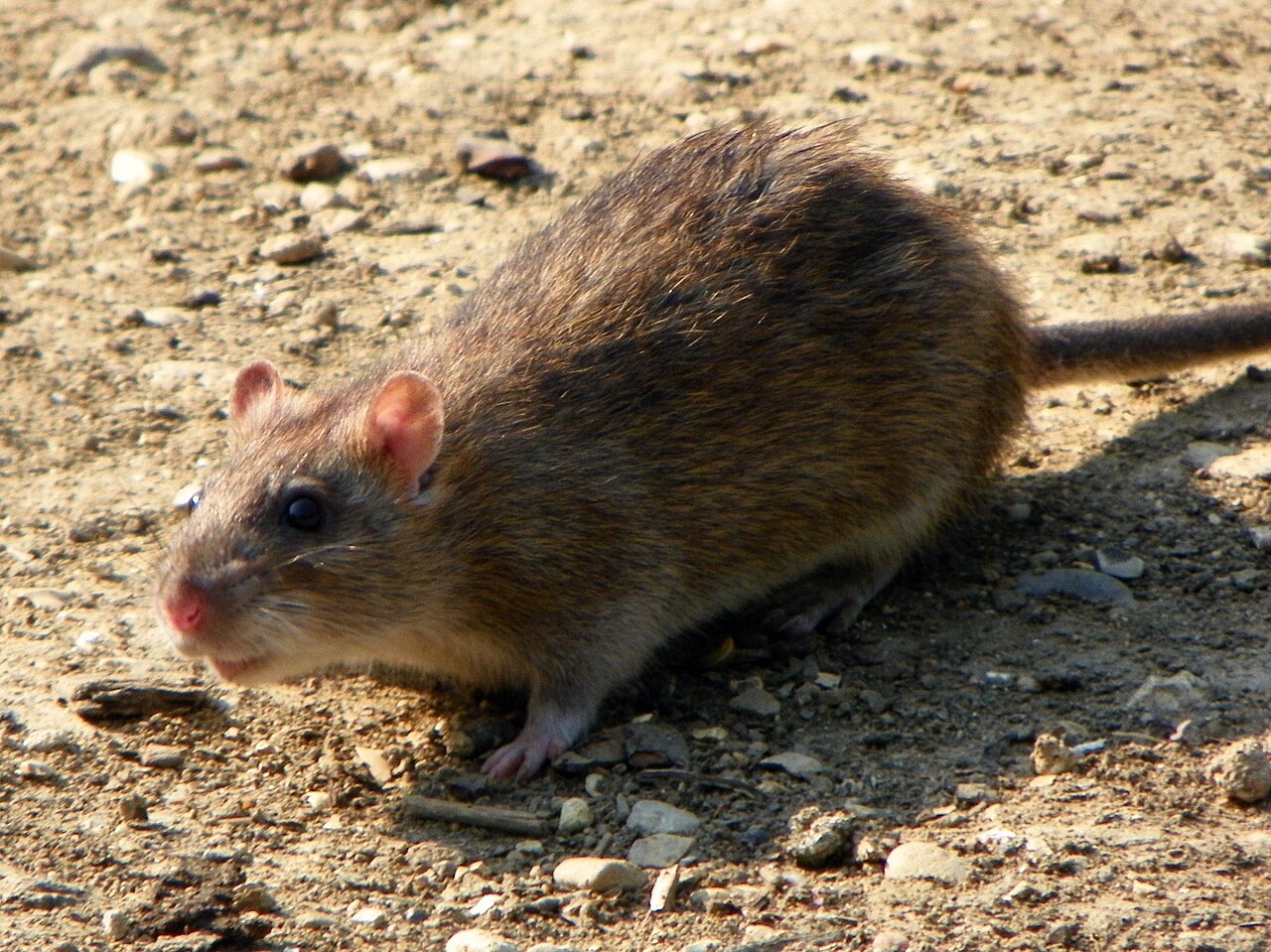
A brown rat (Rattus norvegicus), the species common to Kansas City and Missouri by AnemoneProjectors (talk), Wikimedia Commons, CC BY-SA 2.0

Most people don't find out they have rats. They find out they had rats for a while. The animal is nocturnal, cautious, and good at staying out of sight, so by the time a homeowner actually sees one near the bins, the population is usually well established.
That's the bad news. The good news is that rats leave a paper trail. They are creatures of habit that travel the same routes, leave the same marks, and tell on themselves in predictable ways. If you know what to look for around your trash cans, you can catch the problem early, when it's a two-week fix instead of a two-month one.
This is a field guide for KC Northland homeowners. What the signs look like, what each one means, and why the bin itself is so often the thing keeping rats interested in the first place.
Rats in your trash? Let the Bros clean it.
200°F water. No soap, no chemicals, pet-safe. We come to your curb and haul the funk away.
Book in 60 seconds — 50% off with FIRST50 →What kind of rat you're dealing with in the Northland
Almost every rat in our service area is a Norway rat, also called the brown rat or sewer rat. The Missouri Department of Conservation lists Rattus norvegicus as the dominant commensal rat across the state, and the Northland is no exception. They're stocky, 7 to 10 inches in the body with a shorter tail, and they burrow at ground level rather than nesting up high.
That ground-level habit matters for trash. Norway rats den in burrows under decks, sheds, woodpiles, dense ivy, and the soft soil along foundations, then travel short distances at night to a reliable food source. A trash can that smells like food, sitting in the same spot every night, is close to ideal. Roof rats, the climbing kind, are far less common here, so plan around the Norway rat's ground-level behavior.
The early signs around your trash cans
1. Droppings
The single most reliable sign. Norway rat droppings are dark, capsule-shaped, and about a half-inch to three-quarters of an inch long with blunt ends. You'll find them in clusters along walls, behind the bins, under deck steps, or inside the bin if the lid has been left open.
Fresh droppings are dark and slightly soft. Old ones are gray, dry, and crumble when pressed with a stick (never your hand). Finding a mix of both tells you the activity is ongoing, not a one-time visitor.
2. Gnaw marks
Rats' incisors never stop growing, roughly four to five inches a year, so they gnaw constantly to keep them filed down. The University of Missouri Extension notes that Norway rats can chew through wood, soft aluminum, and even some plastics.
On a trash can, this shows up as rough, splintered gnawing at the lid edge, the rim, or a corner near the base. The marks are usually a sixteenth to an eighth of an inch wide, paired (two front teeth), and lighter-colored where the chewing is recent. A clean round hole low on a plastic bin is a rat door.
3. Rub marks
Rats have poor eyesight and navigate by touch, running the same routes along walls and edges night after night. Their fur carries oil and grime, and over time that leaves dark, greasy smudges, called rub marks, on the surfaces they brush against.
Check the bottom corner of a fence gate, the base of the bin, the edge of a garage door track, the gap under a deck. A dark smear at rat height (within a few inches of the ground) is a travel highway, and it points straight toward both the food source and the nest.
4. Burrows
Norway rats dig. A burrow entrance is a smooth, two-to-four-inch hole in the ground, often with a fan of loose soil outside it and a worn path leading away. Common Northland spots: against the foundation, under a shed or deck, in the mulch bed beside the trash corral, along a privacy fence.
An active burrow has clean, packed edges and no spider webs across the opening. Stuff it loosely with newspaper in the evening; if it's reopened by morning, the burrow is in use.
5. Sounds and pet behavior
Scratching or scurrying in walls, soffits, or under the deck after dark is worth taking seriously. So is a dog or cat that suddenly fixates on the base of a cabinet, the back of the garage, or one corner of the yard. Pets hear and smell rats long before you see any other sign.
Rat droppings or mouse droppings? How to tell them apart
This is the question we get most, because the answer changes the urgency. Mouse droppings are small, roughly the size of a grain of rice (an eighth of an inch) with pointed ends, and there are usually a lot of them scattered widely. Rat droppings are three to four times larger, capsule-shaped with blunt ends, and tend to cluster.
The difference is not academic. A few mouse droppings in a garage is a common, manageable nuisance. Rat droppings near your bins mean a larger animal with a bigger appetite, a faster breeding cycle, and more capacity for property damage. If what you're seeing is clearly rat-sized, treat it as the higher priority.
Why your trash can is the anchor of the problem
Here's the part most pest-control advice skips. You can trap and seal all you want, but if the bins keep offering food, the territory stays valuable and new rats keep arriving to claim it.
A rat needs only about an ounce of food and a little water a day, and a residential trash can supplies both easily. What draws them isn't only fresh garbage. It's the residue baked onto the inside of the bin: meat juice, grease, dairy, dog-food crumbs, the sugary film from soda cans. That residue smells like food to a rat long after the bag is gone, which is why a bin that "looks empty" still gets visited every night.
This is the same dynamic we covered for raccoons in Northland trash and for the bacteria buildup inside neglected bins. The smell that you've stopped noticing is a dinner bell to anything with a working nose. Remove the residue and the bin stops advertising. A bin cleaned with 200°F water at pressure has no grease film and no protein scent for a rat to lock onto, which quietly takes your cans out of the rotation.
Why the Northland sees steady rat pressure
A few local factors keep the population fed and breeding:
- Water everywhere. The Missouri River bottoms near Birmingham, Shoal Creek, the Little Platte, Smithville Lake, and retention ponds in newer subdivisions give Norway rats the standing water they depend on.
- Construction churn. New grading around Shoal Creek, Nashua, and the 152 corridor disturbs existing burrows and pushes rats into adjacent established neighborhoods.
- Mature cover in older areas. Gladstone (64118 and 64119), older Liberty (64068), and parts of North Kansas City (64116) have the dense landscaping, woodpiles, and detached garages that give rats cover close to homes.
University of Missouri Extension puts a single female's output at four to six litters a year of six to a dozen pups each. The exact math depends on conditions, but a few rats with a steady food source become many rats fast. Early detection is the whole game.
The health side, briefly
Rats aren't only a property nuisance. The CDC links Norway rats to diseases including leptospirosis (spread through urine-contaminated water) and salmonellosis, and they carry fleas and mites. For a household with kids playing in the yard or a dog that noses around the bin corner, that's a real reason to act on the early signs rather than wait. We covered the pet-health angle in more depth in is a dirty trash can bad for your dog.
What works, and what wastes your money
What actually reduces rat pressure around bins:
- Take the residue away. A clean bin and tight bagging of all food waste removes the reason rats keep coming.
- Close the openings. Seal gaps larger than a quarter around the foundation, garage, and shed with steel wool packed into caulk or hardware cloth. Rats can squeeze through a hole about a half-inch across.
- Cut the cover. Move woodpiles off the ground and away from the house, thin dense ground ivy, and keep a clear band of gravel or bare soil along the foundation so burrows are exposed.
- Snap traps, placed right. The classic wooden snap trap still outperforms most gadgets. Set traps along the rub-mark routes, not out in the open, and expect rats to ignore them for a few days. Norway rats are neophobic, meaning genuinely wary of anything new in their environment, so patience beats more traps.
What to skip:
- Ultrasonic repellers. Rats acclimate within days. There's no reliable evidence they clear an infestation.
- Poison bait as a first move. A poisoned rat often dies in a wall or burrow and creates an odor problem, and the bait risks pets, owls, and hawks. If you go this route, use enclosed bait stations and ideally a licensed operator.
- A single deterrent. No one fix solves it. Clean bins plus sealed gaps plus traps along the routes is what moves the needle.
What to do this week
If you're seeing one or two of the signs above:
- Walk the bin area in daylight and look specifically for droppings, rub marks, and gnaw edges. Photograph anything you find so you can tell whether it grows.
- Bag every bit of food waste tightly and stop leaving anything loose in the bin overnight.
- Book a deep clean to strip the grease and protein residue that keeps your cans on the rat route. Code
FIRST50gets your first clean at half price. Sign up here.
If you're seeing droppings in multiple spots, an active burrow, or hearing activity in the walls, add a licensed pest-control operator to the list. The bin work removes the food source; the operator handles the established population. Both together is what clears it.
For the wider picture of bin maintenance across the seasons, our KC Northland trash-day guide ties together pickup schedules, odor control, and the wildlife problems that follow a neglected can.
Frequently asked questions
What are the first signs of rats around my trash cans?
The earliest reliable signs are droppings (dark, capsule-shaped, a half-inch or longer, found in clusters near the bins), greasy rub marks low on fences and bin bases, and fresh gnaw marks on lids or rims. Burrow holes in nearby mulch or against the foundation and after-dark scratching sounds are also common early indicators.
How can I tell rat droppings from mouse droppings?
Size and shape. Mouse droppings are about an eighth of an inch with pointed ends and are usually scattered widely. Rat droppings are three to four times larger, capsule-shaped with blunt ends, and tend to cluster along walls and travel routes. Rat-sized droppings near bins signal a higher-priority problem than mouse droppings.
Do clean trash bins really keep rats away?
Cleaning bins removes the grease and protein residue that keeps rats interested even when the can looks empty, so it's a core part of the fix. On its own it won't clear an established population, but combined with sealing gaps and trapping along travel routes, removing the food source is what takes your cans out of the rats' nightly rotation.
Are rats in the trash a health risk to my family or pets?
Yes. The CDC links Norway rats to diseases such as leptospirosis and salmonellosis, and they carry fleas and mites. Households with young children who play in the yard or dogs that investigate the bin area have a practical reason to act on early signs rather than wait for the population to grow.
When should I call a professional about rats?
Call a licensed pest-control operator if you find droppings in several locations, see an active burrow, or hear activity inside walls or soffits. Those point to an established population beyond what trapping alone clears quickly. Pair professional control with bin cleaning and gap-sealing so the food source and the colony are handled together.
Related reading: Raccoons in your Northland trash, why trash cans smell like ammonia, and the bin-by-bin breakdown of bacteria buildup in trash cans.
Rats in your trash? Let the Bros clean it.
200°F water. No chemicals. Pet-safe. No contracts. Code FIRST50 takes 50% off your first clean.