Trash Bin Care for Immune-Compromised Households
August 13, 2026 · Bin Bros KC Team
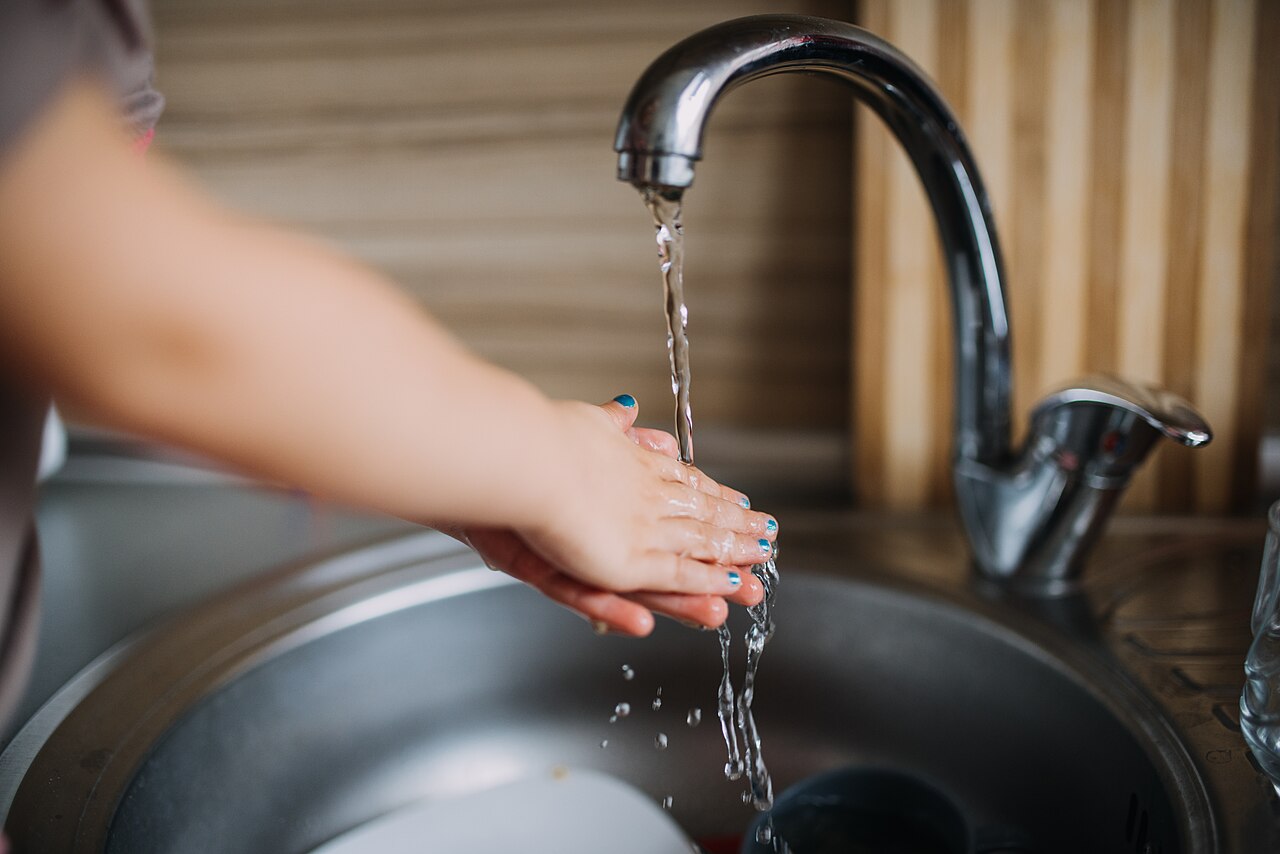
Washing hands at a kitchen sink by Shixart1985, Wikimedia Commons, CC BY 2.0

A woman called us in July from a house off NE 96th Street in Liberty. Her husband had started chemo in May, his counts were down, and the oncology nurse had sent them home with a printed list of things to avoid during the low-count weeks. Cat litter was on it. Gardening was on it. Standing water was on it. Trash was on it too, in three words with no explanation: avoid handling garbage.
She wanted to know what that meant for a 96-gallon cart parked eight feet from the back door.
It is a fair question, and the printed list never answers it. Nobody on a care team has time to explain the difference between a bin you walk past and a bin you scrub. So here is the version we would give a neighbor: what the risk actually is, which parts are worth acting on, and what a household can change in one afternoon.
One thing first. If a care team has given specific neutropenic precautions, those win over anything written here. This is the practical layer underneath them, not a substitute.
Someone in the house can't afford the germs? Let the Bros clean it.
200°F water. No soap, no chemicals, pet-safe. We come to your curb and haul the funk away.
Book in 60 seconds — 50% off with FIRST50 →Why the same bin is a different problem in this house
A trash cart is a warm, dark, wet box holding decomposing organic matter. In a healthy household that is unpleasant and not much else. The immune system absorbs a small dose of something and nobody ever finds out it happened.
Take that immune system down and the same dose stops being absorbed.
The clearest number on this comes from Listeria. The CDC reports that people with weakened immune systems account for about 75% of everyone who gets a Listeria infection, and that roughly one in six of them dies from it. Nationally, an estimated 1,600 people get listeriosis each year and about 260 die. Infection almost always means a hospital stay.
Listeria matters here specifically because of where it lives. It grows in refrigerated food, it survives cold, and it ends up in a bin every time somebody clears out the fridge. Old deli meat, soft cheese, leftovers that got pushed to the back. That bag sits in a cart in a Northland driveway in August at 95 degrees for six days, and by pickup day it is not the same bag.
Which germs in a trash bin actually matter
Three categories, in the order we would worry about them.
Listeria and the fridge-clearing bag
Covered above. The practical takeaway is that the highest-risk trash in the house is not the kitchen scraps. It is the weekly refrigerator purge. Double-bag it, and put it out the night before pickup instead of letting it sit for five days.
Mold spores from the bin interior
This is the one people miss. The film on the inside of a neglected cart is not just bacteria, it is fungal growth, and disturbing it puts spores in the air you are standing in.
Aspergillus is the name that shows up on transplant and stem-cell precaution sheets. The CDC's guidance for people with weakened immune systems is to avoid close contact with soil and dust and to wear an N95 in dusty areas, and it notes that risk runs highest for people who have had a stem cell or organ transplant. A bin lid slammed open on a hot day does the same thing a dusty crawlspace does. It aerosolizes what was sitting still.
That is why "just rinse it out with the hose" is worse advice here than it is anywhere else. Spraying a dry, colonized bin interior with a pressure nozzle is an aerosol generator. We wrote about why cold water fails on that film in the pressure washing myth, and the biology of what is actually growing in there is in bacteria buildup in trash cans.
Salmonella, E. coli, and Campylobacter
The ordinary foodborne trio. For a healthy adult these produce a rough two days. For someone mid-treatment or in their eighties, the same exposure is a hospital admission, and a hospital admission during chemo can push the whole treatment schedule back.
Should an immunocompromised person clean the bin themselves?
No. This is the rare household chore where the answer is genuinely that simple.
Every part of bin cleaning stacks against them at once: aerosolized spores, direct contact with bacterial film, chemical fumes if anyone reaches for a cleaner, bending and lifting 40 pounds of wet plastic, and a task that takes 30 minutes of sustained effort. Someone three days past an infusion should not be doing any single one of those, let alone all five in sequence.
The same logic applies for a different reason to the pregnant members of a household, which we covered in what is safe to handle during pregnancy.
Hand it to a household member, a neighbor, or a service. The task is worth about $37 to make disappear. A hospital stay is not.
What if there is nobody to hand it off to?
Plenty of Northland households are one older adult living alone, and "have someone else do it" is not an answer for them. So here is the version that lowers the risk without eliminating the job.
- Wait until the day after pickup. An empty cart has a fraction of the load a full one does. This single change does more than anything else on the list.
- Wear an N95 and nitrile gloves. Not a cloth mask. The point is the spores, and a cloth mask does nothing for spores.
- Work outside, standing upwind, with the lid propped open for five minutes before you start. Let the air in the cart turn over before you put your head near it.
- Wet everything before you disturb it. Warm water first, poured, not blasted. Wet residue does not become airborne. Dry residue does.
- Long-handled brush only. No leaning into the bin. If the brush cannot reach it, it stays.
- Wash hands for 20 seconds at the sink afterward, and change clothes if there was any splash.
That sequence takes about 15 minutes and gets most of the way there. It is not as good as not doing it, and it is much better than a hose and a bad idea.
Does bleach make the bin safer?
It makes it more dangerous, and this matters more in this house than in any other.
Bleach reacts with the ammonia in decomposing waste and produces chloramine gas. In a healthy set of lungs that is a coughing fit. In lungs already compromised by treatment, a chronic condition, or age, it is an emergency room trip. The full chemistry is in the bleach mistake, and it is the one piece of advice we repeat the most.
Heat does the work that bleach is supposed to do. Our crew runs 200°F water with a pet-safe deodorizer and no soap or harsh chemicals, which means nothing gets aerosolized that a person with compromised lungs then has to breathe. That is not a marketing line about being gentle. It is the entire reason the method works in a house like this one.
Where should the bin live?
Farther from the house than it does now, and that is usually a five-minute fix.
Three placement rules worth following:
- Not in the garage if the garage shares air with the house through a door that opens often, and especially not if the patient's room sits above it. A garage cart is a warm, enclosed, UV-free environment, which is the ideal case for the fungal growth you are trying to avoid.
- Not within 15 feet of an AC condenser or a window unit. Air handlers pull from where they sit.
- Not next to the door the household actually uses. In a lot of Gladstone and Pleasant Valley houses the cart lives beside the back door out of habit, not necessity. The side of the garage works just as well and nobody walks past it four times a day.
How often does it need cleaning in this situation?
Every four to six weeks through the warm months, and quarterly through the winter.
That is tighter than the quarterly baseline we recommend for most households, and the reason is the film rather than the smell. Odor is a lagging indicator. By the time a Northland cart smells in August, the interior has been colonized for a while, and the goal in this house is to never let it get there.
If you are not sure which day your street runs, the trash day map has pickup for every Northland ZIP, and getting the timing right is what makes the day-after-pickup rule workable.
What to do this week
If someone in your house is on chemo, post-transplant, on immunosuppressants, or in their eighties:
- Move the cart today. Off the walking path, away from the AC unit, out of the garage. Five minutes, permanent.
- Change how the fridge purge goes out. Double-bag it and time it to the night before pickup. This is the highest-risk bag in the house and the easiest one to fix.
- Take that person off bin duty entirely, and tell whoever takes it over to wet everything before scrubbing and to skip the bleach.
- Book the deep clean if the interior has visible film or the bottom is tacky. First clean is $37.50 with code
FIRST50, half off the $75 one-time rate — or quarterly service starts at $15 a month. Sign up here. Nobody needs to be home and nobody needs to open the door. We work at the curb.
Related reading: toddler germs from bins covers the same exposure math for the smallest member of the household, and why trash cans smell like ammonia explains the chemistry behind the smell that tells you the film has already taken hold.
Someone in the house can't afford the germs? Let the Bros clean it.
200°F water. No chemicals. Pet-safe. No contracts. Code FIRST50 takes 50% off your first clean.