Trash Bin Cleaning Solution: What to Mix, and When Mixing Won't Fix It
October 9, 2026 · Bin Bros KC Team
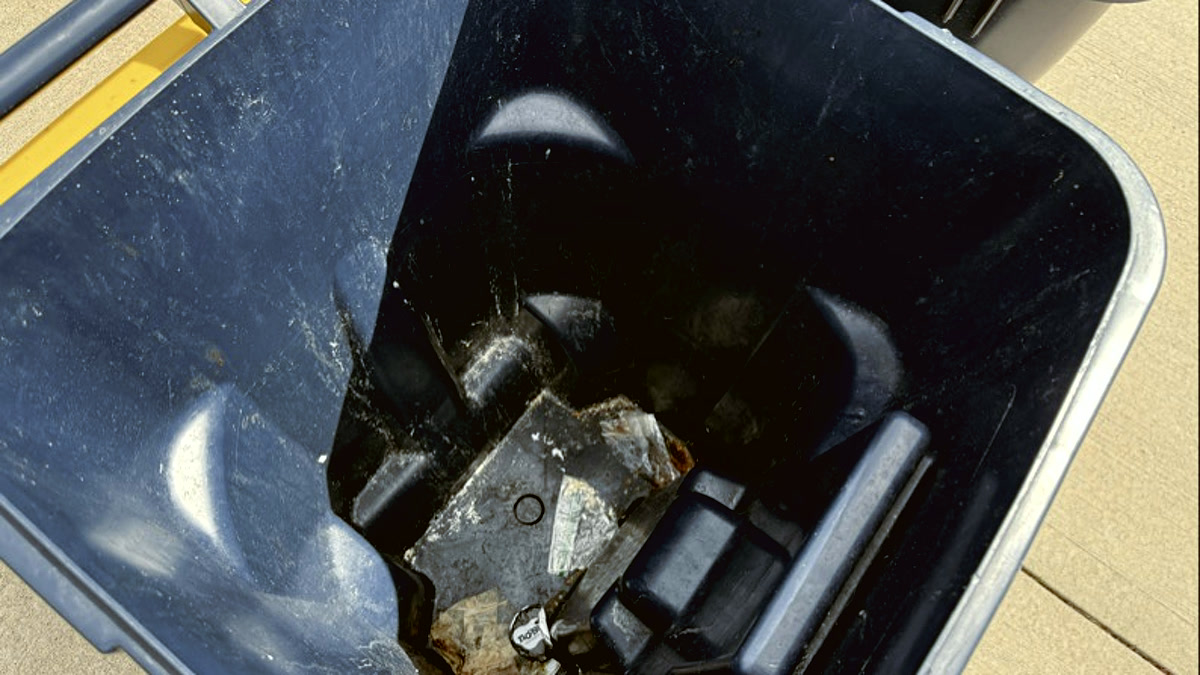
"Trash bin cleaning solution" gets searched by two different people. One wants to know what to mix in a bucket. The other has decided mixing is somebody else's job and wants a service. This answers the first question properly, then tells you honestly where it stops working.
Key takeaway: For a cart that is merely dirty, hot tap water and a few drops of dish soap handles the grease, and an enzyme cleaner is the only household product that actually digests the organic film underneath. White vinegar deodorizes but does not sanitize. Baking soda absorbs smell and works as a mild scrubbing paste. Mixing vinegar and baking soda together mostly just fizzes — they cancel each other out. Bleach is the one to skip. And no mixture solves the two real problems: your tap maxes out around 120°F, and twenty gallons of filthy runoff has to legally go somewhere.
Tried everything under the sink? There's a 200°F option a lot of people don't know exists.
200°F water. No soap, no chemicals, pet-safe. We come to your curb and haul the funk away.
Book in 60 seconds — 50% off with FIRST50 →What to mix: the honest rundown
Dish soap and the hottest water your tap gives you. This is the baseline and it is genuinely worth doing. Soap is a surfactant, so it lifts grease off plastic, which is most of what you can see. A few drops in a couple of gallons is plenty — more just means more rinsing.
An enzyme cleaner. The one household product that does something the others cannot. Enzyme formulas (the kind sold for pet accidents) contain bacteria and enzymes that digest organic matter rather than covering it. That matters because the smell in a cart is not sitting on the surface, it is a living film bonded to the plastic. Spray it on, and — this is the part people skip — leave it wet for several hours. Enzymes need contact time. Drying out stops them working.
White vinegar, roughly one part to one part water. Good deodorizer, mild acid, completely safe around pets and kids, cuts through some mineral residue. What it does not do is sanitize. The acetic acid in household vinegar is too weak and too quickly diluted to kill an established colony, so treat it as a smell treatment rather than a clean.
Baking soda. Two legitimate uses. Made into a paste with a little water it is a mild abrasive that will not scratch the cart, which helps on stuck-on residue. Left dry in the bottom of a clean cart, a cup of it absorbs odor for a week or two.
Vinegar and baking soda together — the one to let go of. This is the internet's favorite trash can recipe and it is mostly theater. An acid plus a base neutralizes into carbon dioxide, water and sodium acetate. The fizzing looks like cleaning and is actually the two ingredients destroying each other's usefulness. Use them separately, on different days, or just pick one.
Bleach: skip it. It degrades the plastic over time, does essentially nothing about the grease film, and decomposing waste gives off ammonia, which you do not want bleach meeting in a confined cart. We wrote up why bleach is the wrong call separately.
Pine cleaners and air fresheners. These mask. There is nothing wrong with that if masking is what you want, but the smell comes back on the same schedule it always did.
Where every mixture runs out
Two walls, and neither is about the product.
Temperature. Bacterial membranes start breaking down somewhere above 160°F. The Department of Energy's recommended household water heater setting is 120°F, and a garden hose runs cold at about 50 PSI. So the hottest water available to you at home is below the line where the film actually releases. That is why a cart you scrubbed looks clean for a day and smells again in two weeks.
The runoff. This is the part nearly every DIY guide leaves out. Bin wash water carries bacteria and food residue. A storm drain is not a legal destination — it runs to creeks untreated. A lawn is legal but you are spreading it where kids and dogs play. The correct destination is a sanitary drain, which means carrying a bucket of trash can water into your house. Most homes have no good option, which is why a lot of DIY bin cleaning quietly stops after the second attempt.
If you want the equipment-rental math, that is our DIY vs. professional comparison.
The other kind of solution
The second group searching this phrase wants someone else to deal with it — and a lot of people genuinely do not know that is an option here. Trash bin cleaning has been a routine household line item in parts of Australia and the UK for twenty years. In the Northland it is new enough that most homeowners have never been offered it and never priced it.
What trash bin cleaning actually is
The whole service takes about two minutes per bin and you don't have to be there.
A truck follows the hauler around one day behind. Your trash goes out Wednesday, we come Thursday, because a cart with three bags still in it can't be washed. You leave the cart at the curb instead of rolling it back in. The crew tips it, runs 200°F water at 3,500 PSI through the inside, finishes with a pet-safe deodorizer made from essential oils, and sets it back down. The wash water is captured in a tank on the truck and disposed of into a sanitary sewer. Nothing goes on your lawn or down the storm drain.
That's it. No appointment window to sit through, nobody at your door, no chemicals left in the cart.
The reason we ask for your trash day at signup is that it's the only scheduling input that matters. Everything else follows from it. If you don't know yours, it's on our Northland trash day map.
What's in the bin that a look inside doesn't show you
Open your cart and you'll see what you expect: a dark film on the floor, maybe some dried juice on the walls, and a smell that's worse than the trash that just left.
The film is the part worth understanding, because it's what makes this a service instead of a chore. It's a biofilm — a bacterial colony that builds a physical scaffold to hold itself onto the plastic. It's why the bottom of an empty cart feels slick, and why the smell comes back the day after you take the trash out. Surface residue dries up. Biofilm doesn't. The full breakdown of what grows in there is in our bin bacteria guide, and the specific sour-ammonia smell has its own article.
Two things make a Northland cart worse than average. One, the carts last a long time. A Kansas City, MO cart belongs to the city and stays with the house, so you can't solve a bad one by buying a new one. Two, our summers. A cart sitting on a driveway in July runs hot and damp for weeks, which is the condition every common bin bacteria wants, and it's where maggots come from.
Why a hose doesn't settle the question
This is the honest objection, and it deserves a real answer rather than a brush-off. You can absolutely clean your own trash can. Lots of people do.
The problem is temperature. A garden hose runs around 50 PSI of cold water, which moves bin gunk around without killing the colony underneath it. Bacterial membranes start breaking down above roughly 160°F, and the Department of Energy's recommended household water heater setting is 120°F — so even your hot tap is below the line. A cold-water consumer pressure washer gets the visible mess off and leaves the biofilm, which is why a hose-rinsed cart looks clean for a day and smells again inside two weeks. We went through that in detail in the pressure washing myth.
Then there's the part nearly every DIY guide skips: where the water goes. Bin wash water carries bacteria and food residue. Storm drains are not a legal destination for it. A lawn is legal but you're spreading it where kids and dogs play. The clean answer is a sanitary drain, which means getting a bucket of trash-can water into your house. Most homes have no good option, which is why a lot of DIY bin cleaning quietly stops after the second attempt.
If you want the full side-by-side with equipment rental costs, that's our DIY vs. professional math.
What it costs in Kansas City, in real numbers
Here's the whole price list. Every plan includes one bin.
| Plan | Per clean | Billed as | Cleans per year |
|---|---|---|---|
| Quarterly (most common) | $45 | $15/mo | 4 |
| Bi-Monthly | $35 | $17.50/mo | 6 |
| Monthly | $25 | $25/mo | 12 |
| One-Time | $75 | once | 1 |
Extra carts are +$5 per clean on a subscription, or +$15 on a one-time visit. So a two-cart house on the quarterly plan is $50 a clean, about $200 a year.
New customers use code FIRST50, which takes half off the first clean. That's $45 down to $22.50 on quarterly, or $75 down to $37.50 for a single one-time clean. There's no contract — a three-clean minimum, then you cancel whenever.
The one-time clean costs more per visit on purpose. A cart nobody has touched in two years is a different job than a cart we saw ninety days ago. If you're deciding between the two, we laid that out in subscription vs. one-time.
Who should not buy this
We'd rather you not sign up and cancel. Skip it if:
- You already hose or pressure-wash your cart and don't mind the job. Some people find it satisfying. The math can't argue with that, and if you own hot-water equipment for detailing or deck work, your marginal cost is basically time.
- You have one small cart and bag everything. A household that double-bags wet waste and never overfills can go a long time on an occasional rinse. We mean that.
- You have a floor drain or utility sink you're actually willing to use for bin water. That removes the disposal problem, which is half of what you're paying us to solve.
- Your cart is nearly new and you're on top of it. Start the clock later. There's no prize for cleaning a six-month-old cart.
- Money is tight this quarter. This is a comfort service, not a necessity. A clean trash can is not going to outrank your utility bill, and we're not going to pretend otherwise.
Who usually ends up hiring it out
- Two or more carts. Most Northland homes have trash plus recycling once you count them, and the second cart is only $5.
- No pressure washer, or a cold-water one. Renting hot-water gear four times a year costs more than the service does.
- Dogs or small kids in the yard. This is where the no-chemicals part earns its keep: heat does the sanitizing, so nothing is left in the cart or on the grass. More on the dog angle here.
- A cart you've inherited. Buying a house in Liberty or anywhere else in the Northland usually means inheriting the previous owner's cart and whatever is grown into the bottom of it. That first clean is the one people notice.
- A back, shoulder or knee that makes wrestling a 96-gallon cart a bad idea.
- You know yourself. The most expensive version of this is deciding to DIY in April, doing it once, and calling a service in August when the cart is bad enough that it needs the $75 deep clean anyway.
The part of our pitch that isn't special
Worth saying plainly, because every bin cleaning company in the metro leads with it: 200°F water is not a differentiator. It's the table stakes of the industry. Other operators around Kansas City advertise 230°F and 250°F, and hotter is hotter. If someone tells you their temperature is the reason to pick them, they're telling you about the equipment everyone owns.
What's actually different about how we do it is the absence: no soap and no chemicals, at any step. Heat does the sanitizing. The only thing that goes in after the water is a pet-safe deodorizer made with essential oils. No bleach, no detergent, no residue in the cart your dog sniffs or the grass it sits on. If you ever get the urge to speed things up at home with bleach, read why that's a bad idea first — it reacts with the ammonia that's already in there.
Quick answers
What is the best solution to clean a trash can?
For grease and visible mess, dish soap in the hottest water your tap gives you. For the smell, an enzyme cleaner left wet for several hours — it is the only household product that digests the organic film rather than covering it. Vinegar deodorizes, baking soda absorbs odor and doubles as a mild scrubbing paste. Skip bleach.
Does vinegar actually sanitize a trash can?
No. Household white vinegar is a decent deodorizer and a mild acid that helps with mineral residue, but the acetic acid is too weak and too quickly diluted to kill an established bacterial colony. Use it for smell, not for sanitizing.
Why shouldn't I mix vinegar and baking soda?
Because they cancel each other out. An acid plus a base neutralizes into carbon dioxide, water and sodium acetate — the fizzing that looks like cleaning is the two ingredients destroying each other's usefulness. Use them separately, or pick one.
What actually gets the smell out for good?
Heat. Bacterial membranes break down above roughly 160°F, and the Department of Energy's recommended household water heater setting is 120°F, so nothing at a household tap reaches it. That is the honest reason a cart you scrubbed smells again in two weeks.
Where am I supposed to dump the dirty water?
A sanitary drain. Not a storm drain — that runs to creeks untreated — and a lawn means spreading it where kids and dogs play. Most homes have no practical answer, which is the quiet reason DIY bin cleaning usually stops after the second attempt.
How often does a trash bin need cleaning?
Four times a year covers most Northland households. Monthly makes sense if you have pets, diapers, or a cart that sits in the sun. Our frequency guide walks through how to pick.
Do I need to be home?
No. Leave the cart at the curb after pickup day and the crew does the rest.
What to do this week
- Look inside your cart. Not at the trash. At the floor and the bottom four inches of the walls. That's the thing you'd be paying to remove.
- Count your carts. Two or more and the math gets easy, since the second one is $5.
- Decide honestly whether you'll do it yourself. If the answer is yes and you have a drain for the water, do that. We'd rather you keep your $180.
- If the answer is no, try one at half price. Code
FIRST50drops a first quarterly clean to $22.50. Sign up here, tell us your trash day, and we'll be there the morning after pickup.
Related reading: What bin cleaning costs in Kansas City, the DIY vs. professional math, subscription vs. one-time, what's growing in a dirty bin, and the local guide for Liberty, MO.
Tried everything under the sink? There's a 200°F option a lot of people don't know exists.
200°F water. No chemicals. Pet-safe. No contracts. Code FIRST50 takes 50% off your first clean.